The House on Lê Lợi Street
Ninety years of a Huế landmark, and twenty as its grand hotel. As Azerai La Residence marks two decades this September, the Art Deco mansion on the Perfume River has lived more lives than most hotels ever will.
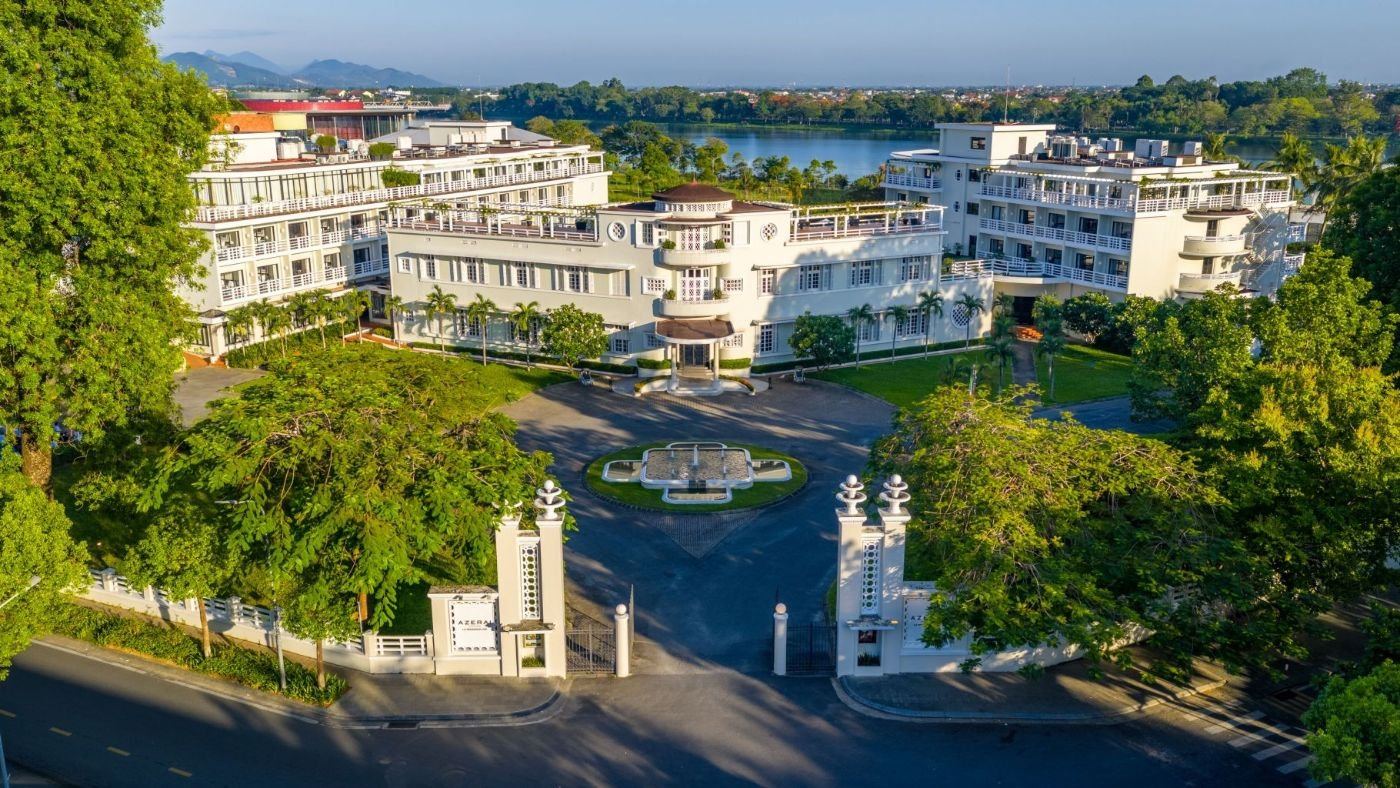
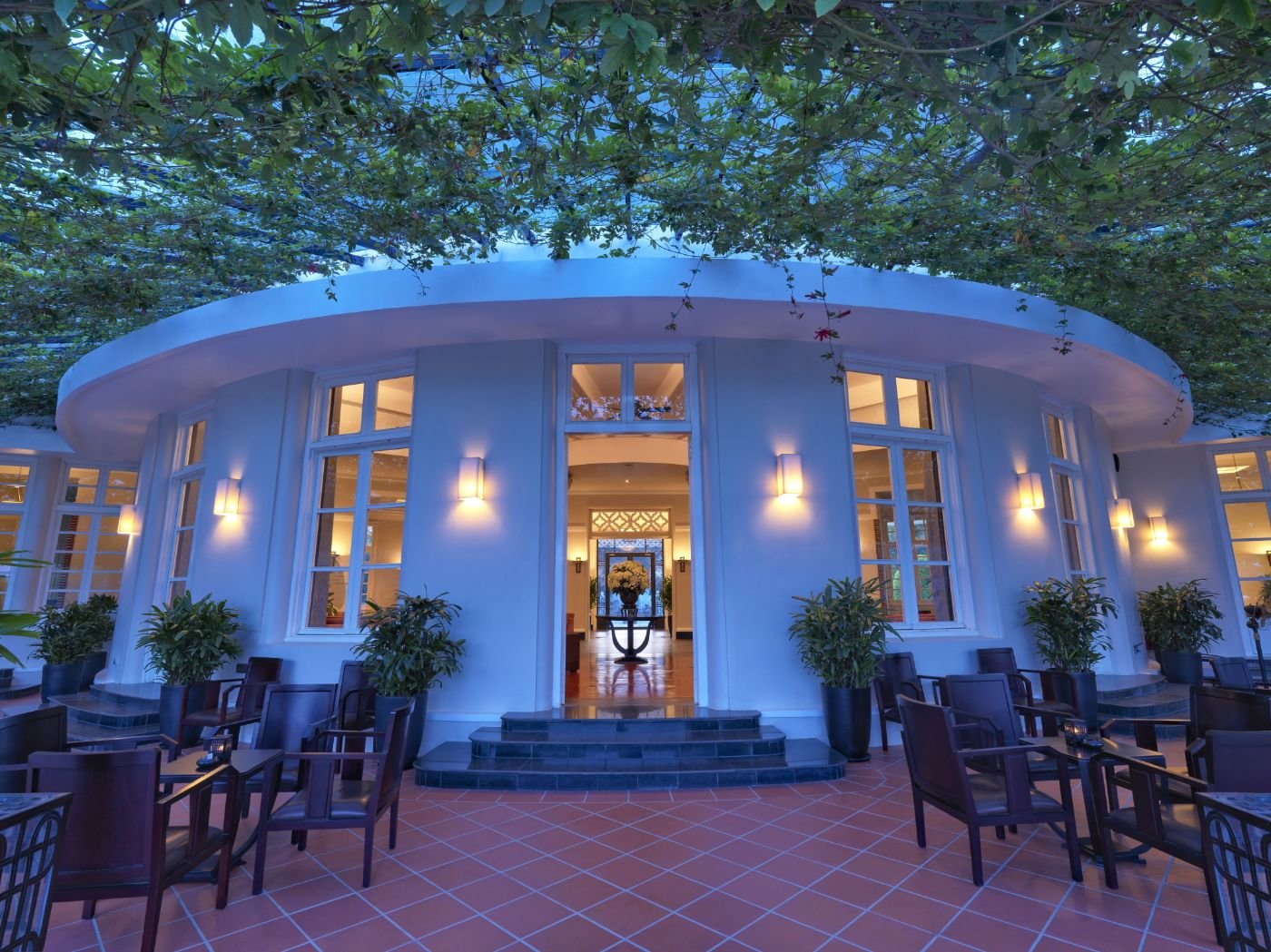
HUẾ, VIETNAM. On the Bar Terrace of Azerai La Residence, Huế, some forty photographs hang in a long row this month. Several show a white Art Deco mansion with a domed rotunda, its lawn running down to the Perfume River. Others show the same building under different flags, with different cars in the drive and different guests on the steps. In the lobby a Memory Book lies open for visitors to add what they remember. On the evening of 30 September the hotel will lead its guests on a walk through the grounds, pour a cocktail beneath the dome, and mark twenty years since the house first welcomed travellers as a hotel.
Twenty years is a distinguished age for a hotel in Vietnam, where the luxury segment scarcely existed before the middle of the last decade. Yet it understates the building. The house at 5 Lê Lợi Street has been the residence of the most senior French official in central Vietnam, a state guesthouse, a French owned boutique hotel, a member of Accor’s heritage collection, and finally the second property of the man who created Aman. Each life left something behind. To understand why La Residence still holds its place at the top of Huế, it helps to walk through all of them.
The first life: a house for the Résident Supérieur
Huế in the late 1920s was a city of two banks. On the north side of the Perfume River stood the Citadel and the court of the Nguyễn emperors. On the south bank the French laid out a quarter of their own: villas, a lycée, a post office, a hospital, and along the water a street they named for Jules Ferry. Today that street is Lê Lợi, and it remains the most graceful address in the city.
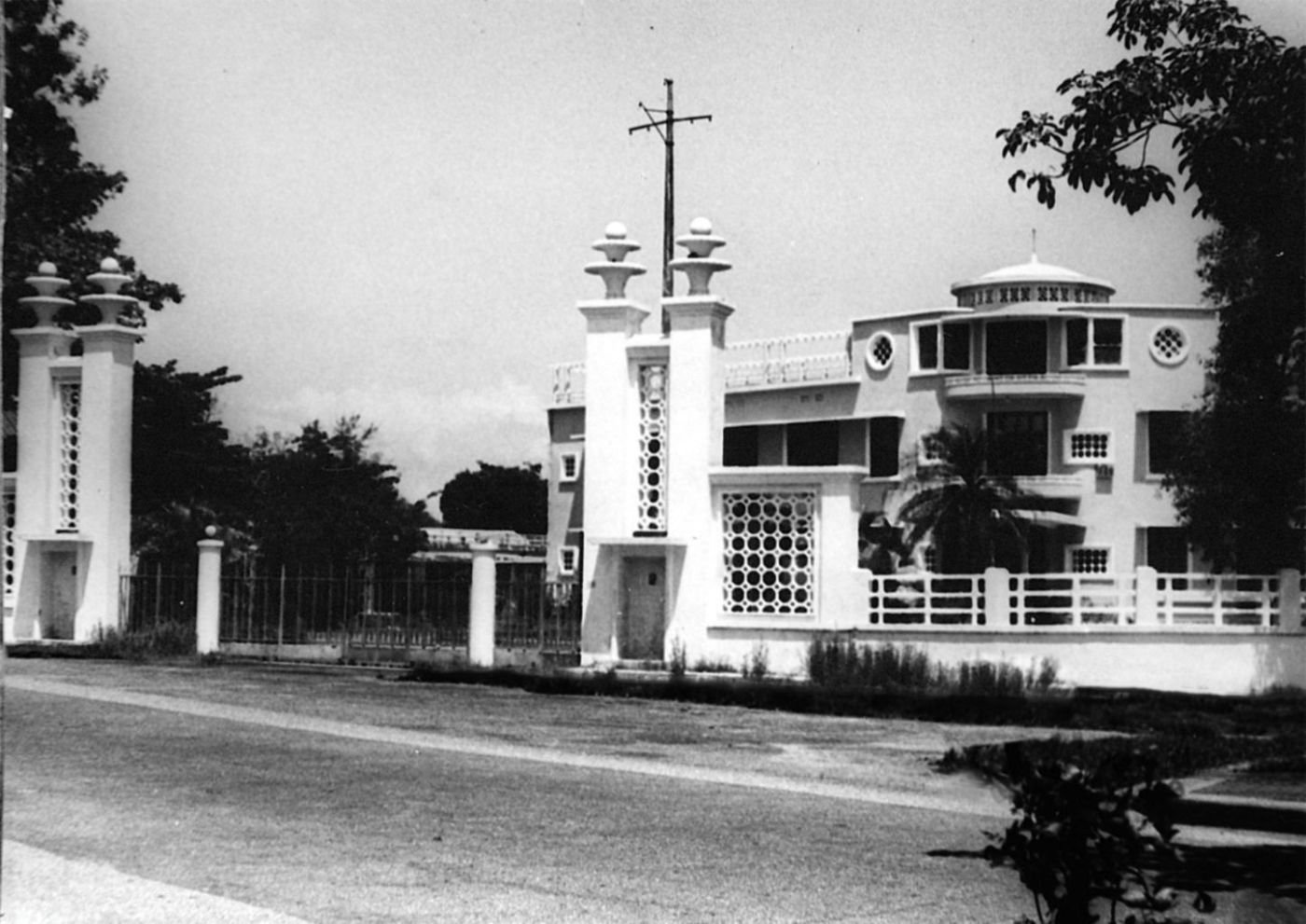
The mansion at the heart of the hotel was built around 1930 as part of the residence of the Résident Supérieur, the senior French administrator in Annam. It was designed in the streamline moderne idiom of the age: long horizontal lines, a central rotunda beneath a shallow dome, sweeping arches, and the nautical geometry of portholes and railings that Art Deco borrowed from the great ocean liners. Where the court across the river built in timber, tile and lacquer, the house on Lê Lợi was a statement of the modern. It faced the Citadel directly across the water, and that quiet dialogue between two architectures, one imperial and one modern, still defines the view from the lawn.
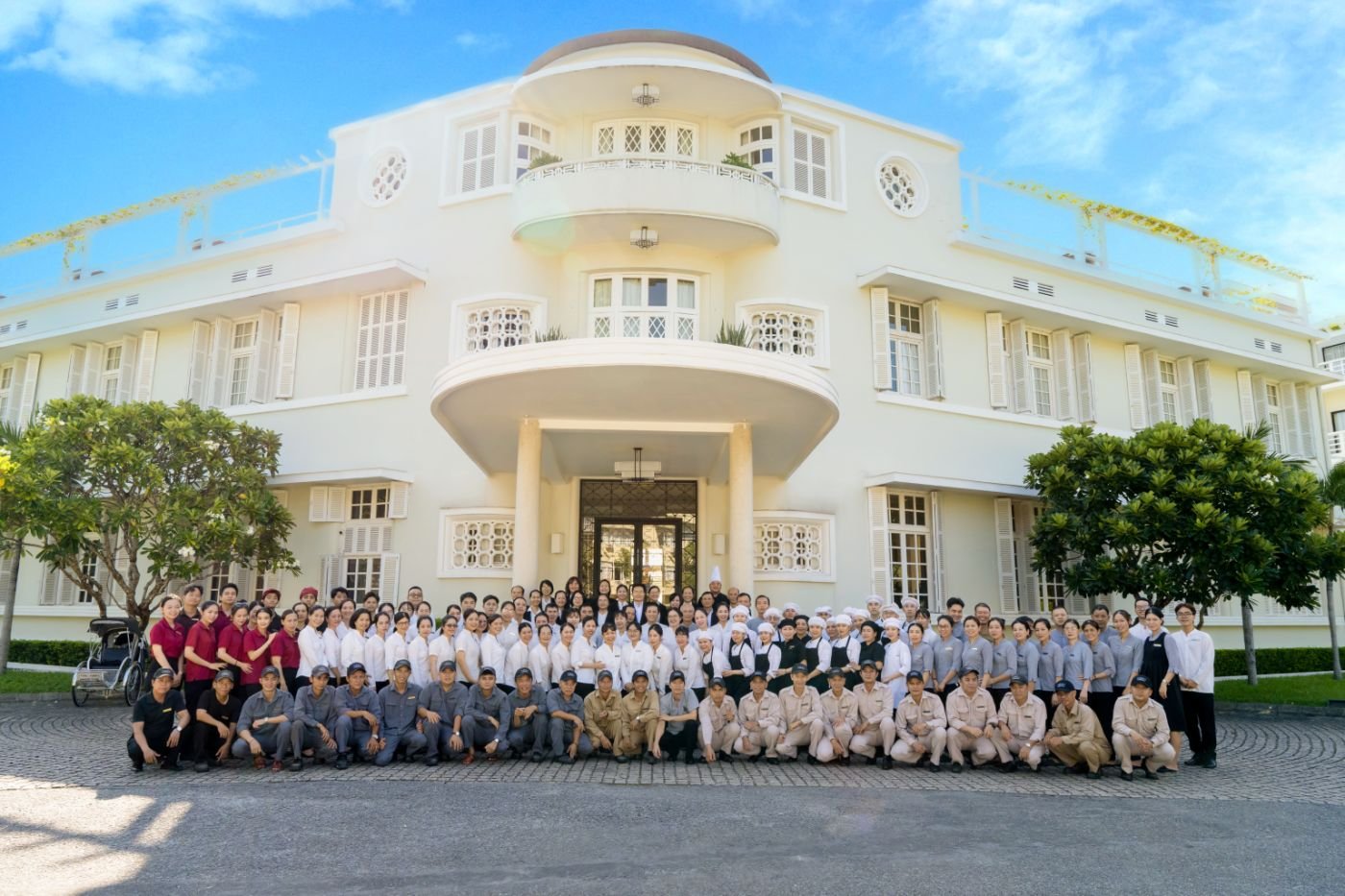
Time has been kind to the design. Huế has other French buildings, but few survive as complete. The rotunda, the ornamental window surrounds and the two long wings that flank the central block are still the first things a guest sees on arrival, and the hotel is right to lead with them. Nine decades on, the mansion is widely regarded as the finest surviving example of Art Deco architecture in central Vietnam.
The second life: the guesthouse years
After 1954 the house passed into Vietnamese hands and served the city’s administration through the decades that followed. From 1975 it became a government guesthouse, the place where official delegations stayed when they came to the former imperial capital. It was well kept and rarely seen. For a quarter of a century one of Huế’s most beautiful buildings, with two hundred metres of frontage on the most storied river in Vietnam, was known to almost no traveller.
That obscurity, in hindsight, was a gift. The building was neither demolished nor over developed during the years when so much of the region’s colonial architecture was lost. When the moment came to bring it back to life, its bones were intact.
The third life: La Residence Hotel & Spa
Restoration began in 2001, at a time when Vietnam’s tourism economy was still young and Huế was, for most visitors, a day trip from Đà Nẵng. A French investor took on part of the property and made the decision that has shaped everything since: rather than rebuild, he restored. The mansion kept its rotunda, its staircase and its window surrounds.
Two new wings were added to the east and west, in a language sympathetic to the original, and the room count rose to 122. In 2005 the property opened as La Residence Hotel & Spa.
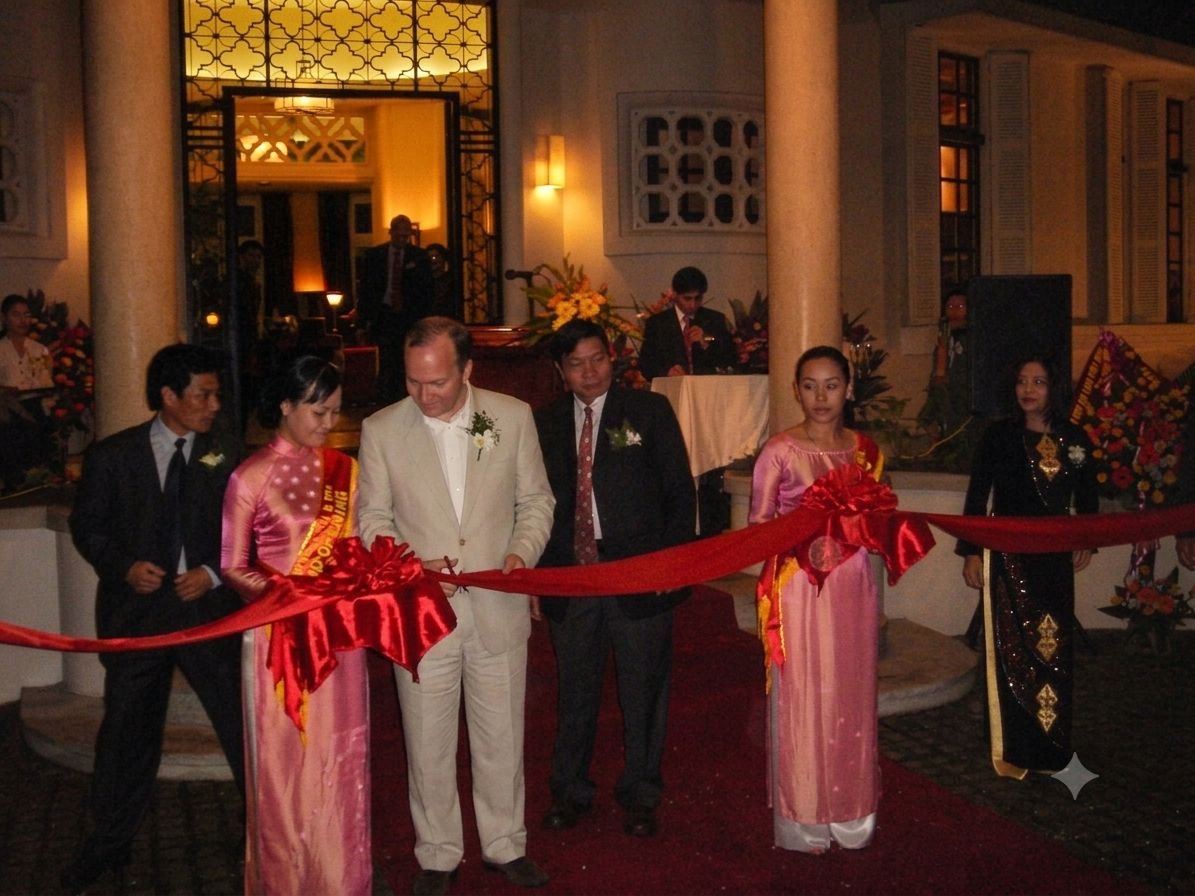
Apple Tree, MGallery and the early honours
Its owner through this period was Apple Tree Group, a Hanoi based hospitality company whose portfolio reads like a map of Indochina’s early boutique era: the Press Club in Hanoi, Emeraude Classic Cruises on Hạ Long Bay, Villa Maly and Kamu Lodge in Luang Prabang, Bagan Lodge in Myanmar. In time the hotel joined MGallery by Sofitel, Accor’s collection of properties with a story to tell, which brought international reach while leaving the character of the house untouched.
Recognition followed quickly. Condé Nast Traveller UK placed the hotel on its Hot List of the world’s finest new openings in 2008. Andrew Harper, the American hideaway guide whose readers are famously exacting, gave it a Grand Award in 2009. From 2011 onward the hotel appeared in Condé Nast Traveler’s Readers’ Choice rankings for Asia nearly every year for more than a decade, and Robb Report Malaysia named Le Gouverneur, the bar inside the rotunda, among the best hotel bars in Vietnam.
Much from this era remains in the building. A set of thirteen portraits of the Nguyễn emperors hangs in the mansion. The original staircase leads up to the Suite du Résident. And the guest book gathered names that most hotels can only imagine. Queen Margrethe II of Denmark stayed here. So did President Fernando Henrique Cardoso of Brazil and Crown Prince Naruhito of Japan. In 2017, on his state visit to Vietnam, Emperor Akihito chose the house on Lê Lợi. For a state visit to Huế there was, in effect, one address.
The fourth life: Adrian Zecha comes to Huế
This era also produced the hotel’s longest serving steward. Phan Trọng Minh, born and raised in Huế, was appointed general manager in 2013. He remains in the role today, the one constant across the two brands and the change of ownership that followed, and in 2025 and again in 2026 Travel + Leisure named him the best general manager in Vietnam.
In 2018 the hotel changed hands once more, and this time the new custodian was a name known to every serious traveller. Adrian Zecha, the Indonesian hotelier who founded Aman Resorts in 1988 and stepped away in 2014, had launched a new brand the previous year. He called it Azerai, fusing his initials with serai, from caravanserai, the inns that sheltered travellers along the old Silk Road. The premise was a graceful inversion of Aman: refined design and discreet service in places of true cultural interest, offered at a price an experienced traveller might reasonably pay.
Zecha’s first Azerai was built from the ground up on an island in the Mekong at Cần Thơ. For his second he chose not to build at all. He took on a hotel then thirteen years old in Huế and gave it the most thorough renovation it had seen since 2005. "In Hue, we wanted a hotel that would emerge as the quintessential hospitality experience in the city," he told the trade press at the time. In February 2019 the property reopened as Azerai La Residence, Huế.
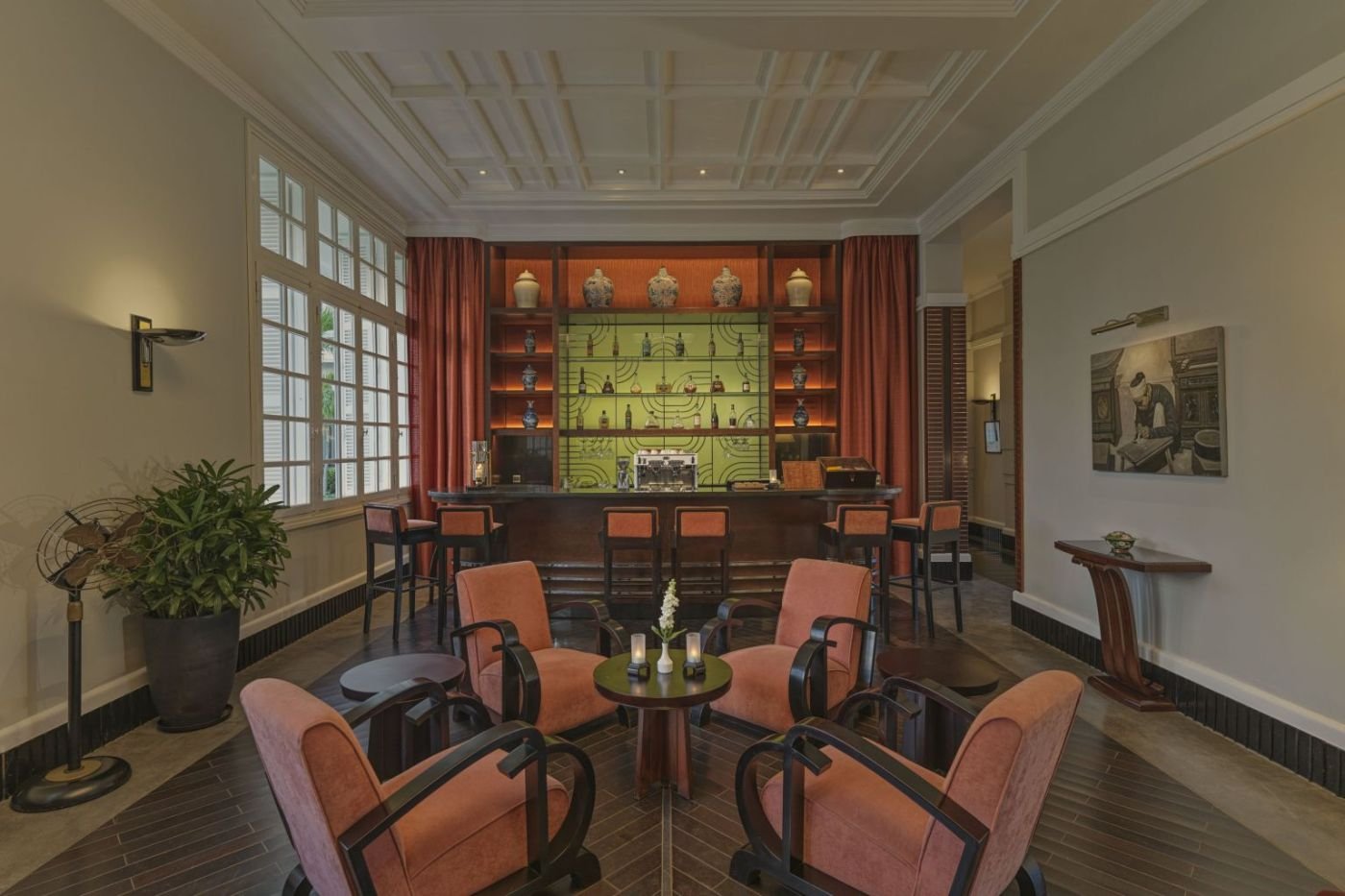
What Zecha did was, above all, an act of restraint. Interiors were pared back so that the architecture could speak: dark timber floors, Art Deco furniture, generous light, a great deal of white. Le Parfum, the restaurant, was refreshed and given a royal Huế tasting menu, Flavours of Royal Gastronomy, that must be reserved in advance. Le Gouverneur, the bar, was relocated from the middle of the curved lobby to the left, opening up the space to the tropical garden and the Perfume River beyond, while keeping its vintage furnishings and its place beneath the dome. A seventeen metre wooden boat, the Nam Xuân, was put on the river for sunset cruises. Within the year Time magazine had named the hotel one of the World’s Greatest Places of 2019, and Condé Nast Traveler readers ranked it tenth among the top hotels in all of Asia.
The rooms, the pool and the estate
The work continued after the February reopening. The 73 rooms of the west wing were renovated first; the 39 rooms of the east wing followed, completed in the spring of 2019. Le Spa now offers six treatment rooms. The gym was moved to the ground floor. The saltwater pool, at forty metres one of the largest in the city, was landscaped anew. Today the estate covers 2.5 hectares, with the same two hundred metres of river frontage that once belonged to the Résident.
The honours have only broadened. Travel + Leisure’s Luxury Awards Asia Pacific named La Residence the best upcountry hotel in Vietnam in 2023 and again in 2024. The Times of London placed it among the sixteen best hotels in Vietnam in 2025, and NOW Travel Asia named it Asia Pacific’s top heritage hotel the same year. In 2026 it stands on Travel + Leisure’s list of the world’s 500 best hotels.
What the guests say
Awards are the verdict of editors. Reviews are the verdict of people who paid for the room. On TripAdvisor the hotel holds a rating of 4.7 across more than 3,100 reviews, and the pattern within them is more telling than the number.
The architecture is admired almost without exception. So is breakfast on the riverside terrace, the spa, the immaculate housekeeping, and the sense that the experience is worth considerably more than the rate. But what guests write about most, and name most precisely, is people. A reception captain named Hào appears in review after review across several years. So do Ms Yến Trần, a Le Parfum waitress named Hiếu, and a porter named Huy. Guests describe the service as attentive without ever hovering, which is precisely the register Zecha built Aman upon, and which finds a natural home in Huế, a city whose people are known throughout Vietnam for their reserve and their courtesy.
Zecha’s restraint is not for everyone; a few guests arriving from more decorative hotels elsewhere in Asia wish for more colour on the walls. But those who come for the house, the river and the quiet tend to leave as the hotel’s most loyal advocates, and the return rate speaks for itself.
Huế’s living room
Every great destination has a hotel that serves as its receiving room, the place where the city meets the world. For Huế, for twenty years, that room has been La Residence. When an emperor came, he stayed here. When a queen came, she stayed here. When international editors arrive to decide whether Huế deserves three nights rather than one, they very often stay here too, and the awards list suggests what they concluded.
The city around the hotel is changing faster than at any point in those two decades. On 1 January 2025 Huế became Vietnam’s sixth centrally governed city, and that same year it hosted the National Tourism Year under the theme Ancient Capital, New Opportunities. The results, according to the city’s tourism authorities, were remarkable: 6.3 million visitors in 2025, an increase of 61 percent, among them 1.9 million international travellers, and tourism revenue above 13 trillion đồng, up 64 percent. Huế is no longer a day trip.
Growth of that kind will bring new hotels, and many of them will be larger and newer. La Residence has never competed on newness. Its strength lies in the things that cannot be built: a mansion that has stood for nine decades, a lawn that faces the Citadel across the water, a boat on the river, a kitchen that treats the cuisine of the Nguyễn court with the seriousness it deserves, and a team that guests remember by name. That is heritage in its truest sense, and it is also, not by coincidence, the Azerai philosophy.
Twenty years, four lives
Back on the Bar Terrace, the photographs run in a line from a colonial residence to one of the most decorated hotels in Southeast Asia, with the same façade at either end. A guest who reads them in order will notice that the building itself changed remarkably little.
Everything around it changed: the country, the city, the traffic on the river, the flags on the pole, the people on the steps. The house on Lê Lợi has outlasted an empire, a war and half a century of transformation, and it has never looked better than it does today. On 30 September it will host a celebration for the fourth of its lives. Given its history, it would be unwise to assume it will be the last.
Photographs courtesy of Azerai La Residence, Huế.
Get The Post.
The global travel stories that matter, three mornings a week. Free.