Airbus A400M's Unique Propeller Design Reduces Cabin Noise, Boosts Tactical Airlift Safety
The Airbus A400M Atlas employs a distinct 'Down Between Engines' propeller configuration, a design choice that significantly lowers internal noise and vibration, thereby enhancing safety and communication during critical military air drop operations.
A400M's Distinctive Design for Modern Airlift
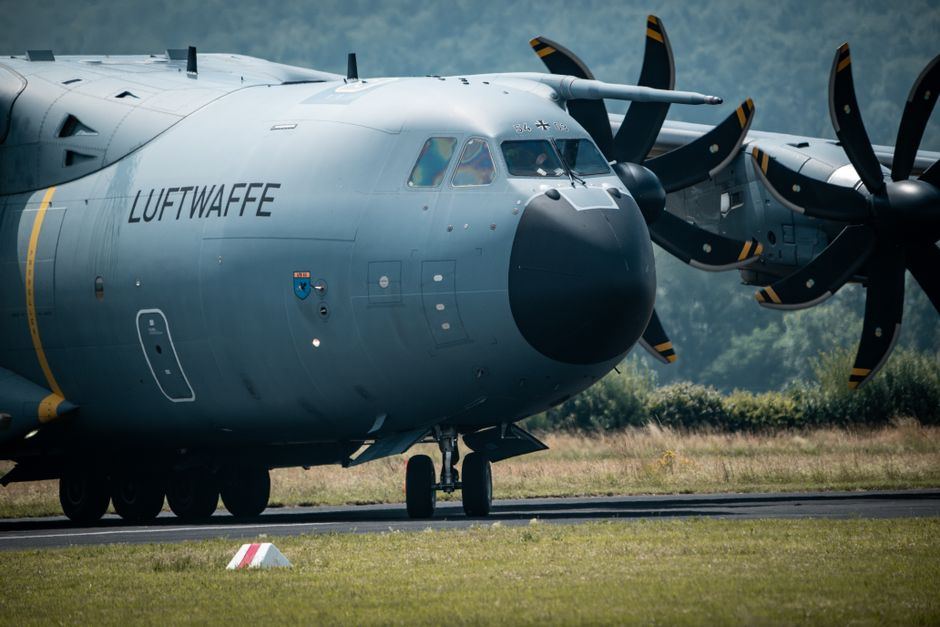
The Airbus A400M Atlas military transport aircraft, which has taken over from the Lockheed C-130 Hercules in several European air forces, stands apart with its unique propeller arrangement. Known as Down Between Engines (DBE), this counter-rotating propeller scheme is exclusive to the A400M, according to a 24 July 2026 report by Simple Flying. The aircraft is equipped with the Europrop TP400-D6, among the most powerful turboprop engines ever manufactured. This specific configuration contributes to the Atlas's distinct performance characteristics and operational advantages, distinguishing it from conventional multi-engine turboprops.
Engineering Behind Reduced Noise
The DBE system involves the two Europrop TP400-D6 turboprops on each wing rotating inward and downward towards each other. On the port wing, the outermost propeller rotates clockwise, while the inboard one turns counterclockwise. Conversely, on the starboard wing, the propeller closest to the fuselage rotates clockwise, and the outer propeller spins counterclockwise. This arrangement directs the upward stroke of the propeller blades to the outermost and innermost boundaries, with the downward stroke occurring between the engine nacelles. Consequently, shock waves and tip vortices from the propellers meet in the space between the nacelles, preventing them from impacting the fuselage skin, as detailed by Simple Flying.
Operational Advantages for Personnel
This design choice directly reduces internal cabin noise and vibration, a significant improvement over previous military transports like the C-130, which generated considerable noise and asymmetric airflow. For the A400M, a quieter cabin reduces fatigue for up to 116 paratroopers during transit and facilitates clearer voice commands from jumpmasters, improving safety and precision in airborne deployments. Furthermore, it enables more effective pre-jump briefings and tactical coordination right before operations. The reduced noise also provides a more tolerable environment for non-military passengers, such as diplomats or medical evacuees, setting a higher standard for comfort and communication in tactical airlift.
Implications for Global Defence
The A400M's innovative DBE propeller design, as reported by Simple Flying, establishes a new benchmark for military transport aircraft. By prioritising crew and passenger well-being through noise and vibration reduction, Airbus has delivered an airlifter that directly enhances mission effectiveness and safety. For global defence organisations, this translates into improved operational readiness and more precise execution of critical airborne tasks. This technological advancement means that personnel flying on the A400M will benefit from better communication and reduced fatigue, potentially leading to safer outcomes in complex and hazardous scenarios.
Get The Post.
The global travel stories that matter, three mornings a week. Free.
By subscribing you consent to receive this newsletter from GlobalTravelPost (Asia Press Centre Group); unsubscribe at any time.