US Airlines Benefit from Baggage Fee Tax Exemption Under Scrutiny
US carriers, including Frontier Airlines, Allegiant Air, and Breeze Airways, currently benefit from a federal tax code structure that exempts separately charged baggage and ancillary fees from the 7.5% excise tax applied to base airfares. This disparity incentivises airlines to unbundle services, shifting costs into untaxed fees and potentially reducing government revenue by millions annually.
Tax Code Drives Unbundling of Airfare Components
US federal tax regulations currently provide a significant incentive for airlines to segment their pricing structures. Domestic airfares are subject to a 7.5% federal excise tax; however, charges for separately booked items, such as checked baggage, are exempt from this levy. This disparity creates a financial benefit for carriers that unbundle their services.
For instance, a $200 fare inclusive of a checked bag would incur $15 in excise tax. Conversely, a $160 base fare combined with a $40 checked bag fee results in only $12 in percentage excise tax, demonstrating a $3 tax saving. Across the entire passenger volume annually, major airlines collectively save approximately $100 million in taxes due to this provision.
This establishes a strong commercial driver for airlines to move revenue from the taxable 'fare' category into untaxed 'fees', encompassing charges for seat selection, priority boarding, and carry-on luggage. This practice, driven by the current US federal tax code, directly influences how air travel costs are presented to consumers.
Frontier Airlines' Practices Highlight Fee Complexity
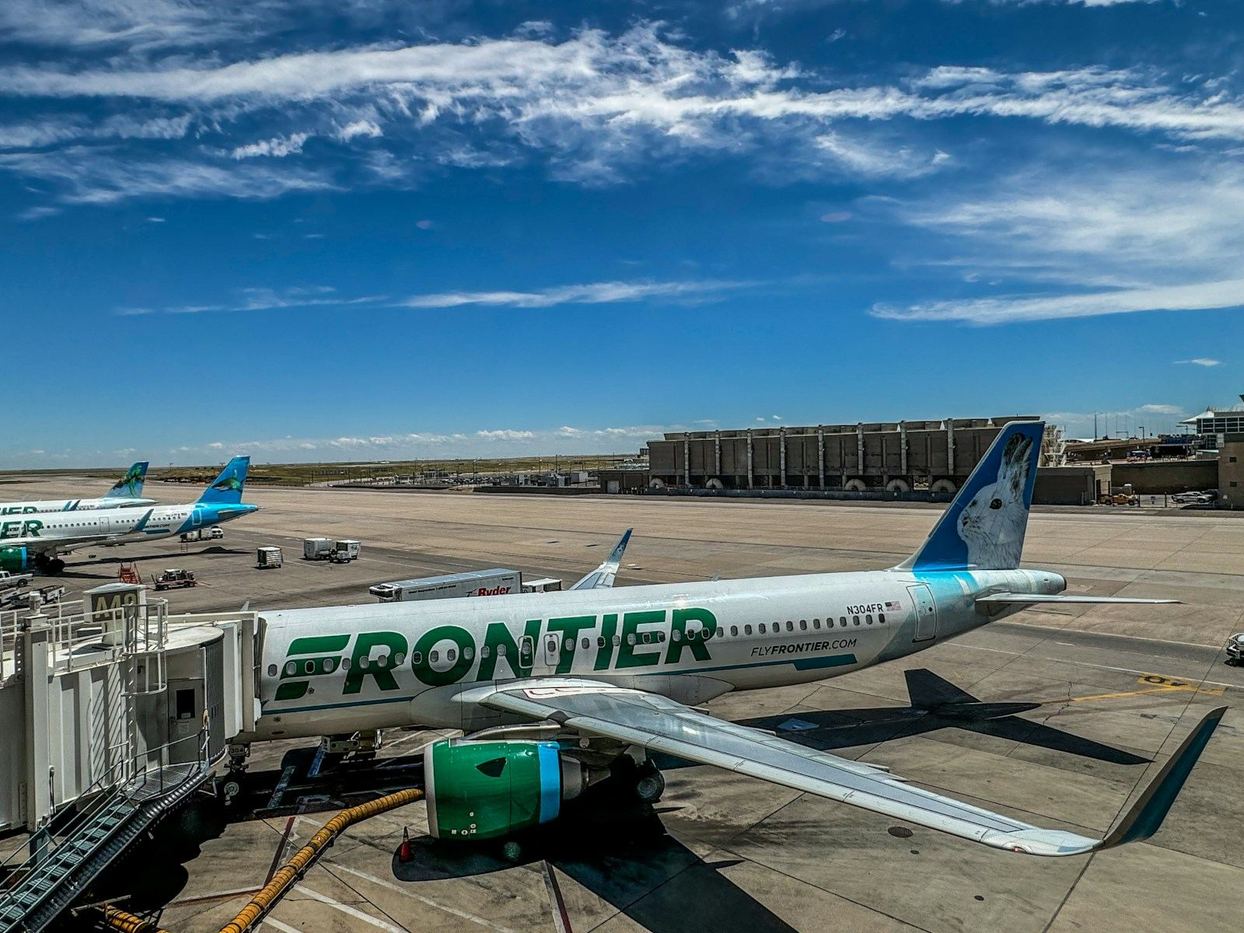
Frontier Airlines' operational practices highlight the implications of this tax structure, particularly concerning its "Carrier Interface Charge". This fee applies to tickets purchased via the airline's website, with the theoretical option for customers to avoid it by booking in person at an airport counter.
However, a Frontier Airlines customer reported on 8 September 2026 that their attempt to circumvent a $23 online booking fee for a flight from Raleigh-Durham to Philadelphia yielded an unexpected outcome. While the online fare was $44.98, the airport counter price, after the booking fee was removed, stood at $50.98 due to a higher base fare.
This resulted in the customer paying an additional $6 to avoid the initial $23 charge.
A Frontier support supervisor reportedly stated via email that "Ticket prices are now dynamic and are based on the fare available at the time, demand and channel of purchase." Another customer similarly reported a marginal $2 saving when purchasing tickets in-person, as higher airport base fares largely offset the waived online fee.
Inconsistencies may arise from Frontier's reliance on contractors for airport customer service, affecting training and booking processes.
Broader Industry Examples and Past Issues
The strategy of shifting costs to untaxed fees is not exclusive to Frontier Airlines. Other carriers employ similar approaches; Breeze Airways, for example, explicitly excludes airport bookings from eligibility for promotional codes. Allegiant Air and Sun Country Airlines also utilise variations of the airport booking workaround.
An Allegiant Air customer reported an $83 online ticket price, only to be quoted $100 by an agent. After removing a $22 booking charge, the price adjusted to $78, yielding a mere $5 saving. This particular purchase was completed by phone after the customer found the airport counter unstaffed.
Furthermore, Frontier Airlines customers have previously reported being charged $25 for airport bookings when attempting to avoid online fees. This follows an earlier instance, reported in April 2026, where Frontier Airlines was stated to have retained $5.4 million in Transportation Security Administration (TSA) security fees, an amount intended for government use.
These instances collectively demonstrate a pattern of pricing practices that can complicate the actual cost of air travel for consumers.
Calls for Legislative Reform and Future Outlook
The current regulatory framework, which differentiates between taxing base fares and exempting ancillary fees, lacks a clear justification and creates a distorted incentive for airlines. Proponents for reform argue that all components of air travel — including airfare, booking charges, baggage, and seat assignments — should be subject to the same percentage tax.
To avoid increasing the overall tax burden on either consumers or the industry, the proposed solution involves reducing the tax rate while broadening its application, thereby maintaining projected revenue neutrality for the government. This legislative adjustment would aim to ensure equitable treatment for all methods of selling a trip.
For travellers, this could translate into more transparent pricing structures, potentially reducing the prevalence of unexpected fees and making direct cost comparisons simpler.
For the aviation industry, such a reform would necessitate a re-evaluation of current revenue models and pricing strategies, potentially leading to a consolidation of charges and a clearer presentation of total travel costs. The US Congress is the body with the authority to enact such changes, and industry observers will monitor legislative discussions closely for developments.
Get The Post.
The global travel stories that matter, three mornings a week. Free.