Three Hotels, Ninety Days, One Message: TUI Has Arrived in Southeast Asia
With a trio of openings across Vietnam and Cambodia in a single season — and a course set towards more than 50 hotels in Asia — TUI Hotels & Resorts is turning years of quiet groundwork into visible momentum. Duc Phan, the group's Regional Business Development Director for APAC, tells the story behind the expansion.
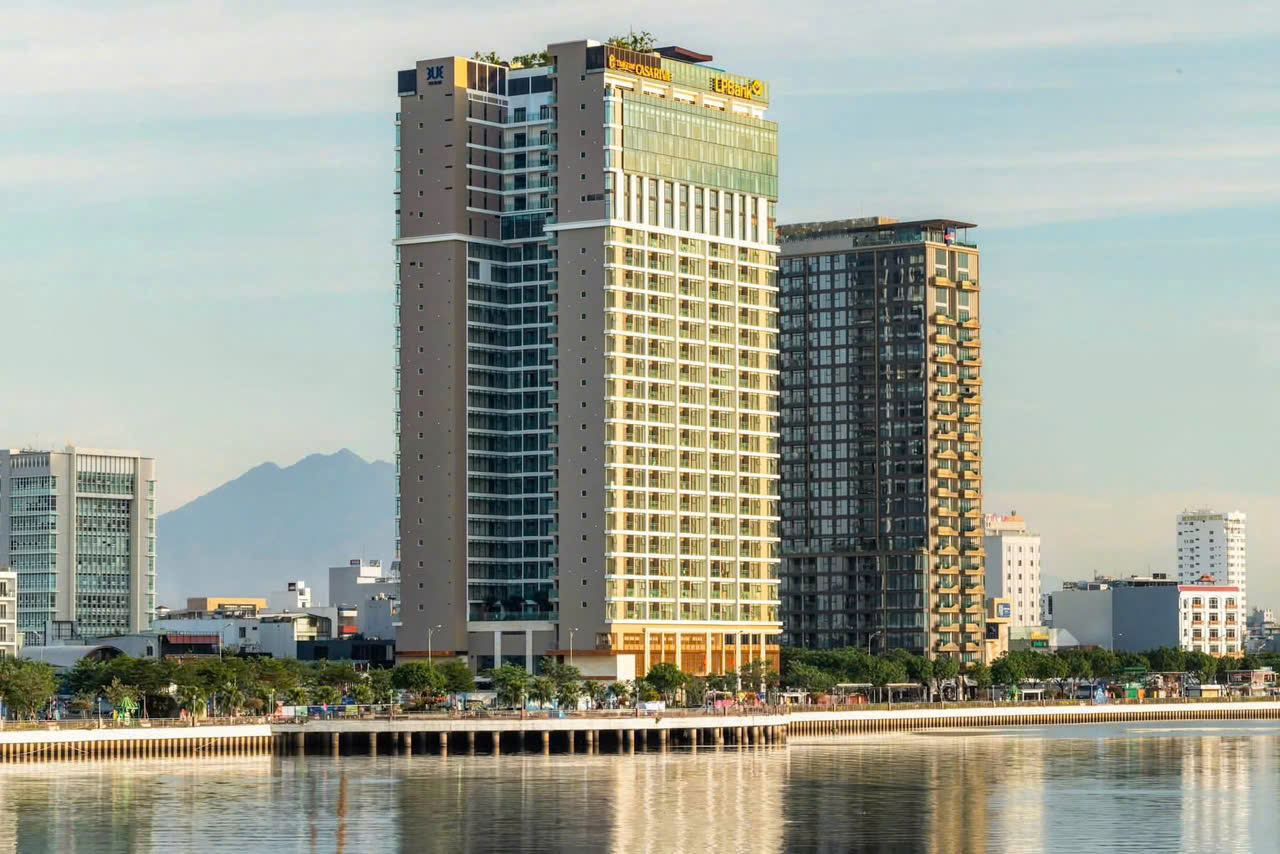
There are seasons when a hotel company opens a property. And then there are seasons like the one TUI Hotels & Resorts is having in Southeast Asia — three openings in roughly ninety days, across two countries: TUI SUNEO Danang and TUI BLUE Han River on Vietnam's central coast, and TUI SUNEO Olympia Phnom Penh, the brand's debut in Cambodia.
For the German travel group, long known in Asia primarily as the tour operator carrying millions of European holidaymakers, the cluster of openings is the clearest statement yet that the region has moved to the centre of its hotel strategy. And nobody makes that statement with more conviction than Duc Phan, TUI Hotels & Resorts' Regional Business Development Director for APAC — the man whose remit covers the partnerships behind the current wave of growth.
“These three openings mark a defining milestone in TUI Hotels & Resorts' growth journey in Southeast Asia,” Mr. Phan says. “They are far more than the addition of new hotels — they represent the acceleration of a long-term strategy to establish TUI as one of the region's leading international leisure hospitality brands.”
The momentum did not appear overnight. “Over the past several years, we have invested significant time in building trusted partnerships, understanding local markets, and demonstrating that TUI's integrated tourism ecosystem creates measurable value for hotel owners,” he explains. “Today, we are beginning to see the momentum of that strategy.”
The timing could hardly be better. Vietnam welcomed a record 21.2 million international visitors in 2025, up 20.4 per cent year on year, according to the Vietnam National Authority of Tourism — and TUI has publicly set a course towards more than 50 hotels in Asia. Launching three properties in one season, Mr. Phan believes, “sends a strong message to the market. It reflects growing confidence among investors and developers that the future belongs to operators who can deliver not only exceptional hotel management, but also global demand generation through an integrated travel ecosystem.”
“This is not simply a period of expansion — it is the beginning of TUI's next chapter in Southeast Asia.”

From Promising Bet to Strategic Priority
When TUI introduced its first TUI BLUE resort in Vietnam in 2020, headquarters in Hannover saw a promising emerging destination with long-term potential. Six years on, the view has changed entirely — and Mr. Phan describes the shift with evident pride.
“The transformation has been remarkable,” he says. “Today, Vietnam is firmly recognised as one of Asia's most dynamic tourism markets and a strategic priority for TUI's future expansion.” The country's record arrivals, heavy investment in airports and expressways, and the success of TUI's own hotel partnerships have, in his words, “proven that Vietnam is ready for internationally branded leisure hospitality on a much broader scale.”
The result is a conversation at headquarters that has fundamentally changed in tone. “Discussions at headquarters are no longer centred on whether Vietnam represents an opportunity,” Mr. Phan says. “Instead, the conversation is about how quickly we can responsibly expand our footprint while maintaining the quality, consistency and guest experience that define the TUI brand.”
Vietnam, he argues, occupies a rare position. “Few destinations combine such outstanding natural beauty, rich cultural heritage, exceptional cuisine, competitive value, political stability, and rapidly improving tourism infrastructure. More importantly, Vietnam still offers considerable opportunities for internationally branded leisure hotels, particularly outside the traditional gateway cities.”
Cambodia completes the picture. With Angkor among the world's great cultural destinations and Phnom Penh strengthening its position as both a business and leisure hub, the two countries are, in Mr. Phan's view, “evolving into a highly attractive multi-destination travel corridor, allowing European and international travellers to seamlessly experience beach holidays, cultural exploration and city breaks within a single itinerary.” Looking towards 2030, he expects Vietnam and Cambodia “to become two of the strongest pillars of TUI Hotels & Resorts' Asian portfolio.”

How the Deals Get Done
Behind each new flag is a negotiation — and Mr. Phan is candid about what actually drives them. Take the partnership with TTC Land, one of the agreements underpinning the current expansion. “The TTC Land partnership was built on shared vision rather than simply commercial negotiations,” he recalls. “TTC Land wanted a partner capable of positioning the property internationally, while TUI sought an owner committed to delivering world-class guest experiences.”
The talks, he says, were “open, transparent and constructive — from investment planning and operational standards to commercial strategy and long-term asset performance,” united by one objective: “creating a hotel that will remain competitive and profitable for decades, not just achieve a successful opening.”
Contrary to industry assumption, it is rarely money that slows a deal down. “Commercial terms are rarely the biggest challenge,” Mr. Phan says. “The most important — and often the longest — part of any negotiation is aligning expectations.” Many owners arrive focused on management fees; TUI steers the conversation towards total asset performance and long-term value creation.
“Once the conversation shifts from ‘What does an international operator cost?' to ‘How much additional value can the operator create?', the entire dynamic changes.”
That, he says, “is when discussions become strategic rather than transactional — and partnerships become much stronger.”
It also explains where TUI tends to win against rival international operators. “We are at our strongest when owners evaluate operators not only by brand recognition, but by their ability to generate business,” Mr. Phan says. “Ultimately, we don't compete on management alone. We compete on our ability to deliver sustainable business performance.”
Discipline, though, cuts both ways — and TUI has walked away from opportunities. “Absolutely. Growth has never been our objective at any cost,” he says. “If an owner is unwilling to invest in product quality, maintain international standards or share our commitment to guest satisfaction, we would rather decline the opportunity. For us, protecting brand integrity always comes before expanding the portfolio. Sustainable partnerships create sustainable success.”
The Power Behind the Flag
Ask Mr. Phan what sets TUI apart, and the answer comes without hesitation: the group's integrated model. “TUI is not simply a hotel management company — it is one of the world's largest integrated tourism groups,” he says. “Every year, millions of travellers choose their holiday through TUI's tour operators, airlines, online platforms, travel agencies and destination services long before selecting a hotel. This creates a powerful competitive advantage for our hotel partners.”
The commercial impact is tangible, particularly through the European leisure guests TUI's ecosystem delivers. “European leisure travellers fundamentally improve the quality of a hotel's business mix,” Mr. Phan explains. “They tend to book earlier, stay longer, travel during shoulder seasons and spend significantly more on dining, wellness, excursions and destination experiences.” For owners, that means steadier occupancy, stronger ancillary revenues and less reliance on discounting. “Ultimately, attracting more international leisure guests is not simply about increasing volume. It is about improving profitability.”
Each property is matched to one of two brands. TUI BLUE serves experience-oriented lifestyle travellers — “for adults, families or holidaymakers interested in local culture and authentic experiences” — while TUI SUNEO “offers excellent value for money and holiday experiences for couples, families and friends.” The choice, he says, depends on the destination, the facilities, the competitive landscape “and, most importantly, the owner's long-term vision.”
If there is one misconception Mr. Phan is keen to correct among Vietnamese owners, it is the idea that an operator's value lies mainly in its name. “The logo is only the visible part of the partnership,” he says. “The real value comes from everything behind the brand: global distribution, revenue management, commercial strategy, operational expertise, talent development, digital marketing, quality assurance and access to international demand.” The best results, he adds, come “when owners see us as a long-term strategic business partner working towards the same objective: maximising the long-term value of the asset.”
Shaping the Map, Not Following It
Nothing illustrates TUI's confidence better than its early move into Tuy Hoa, a coastal destination the group entered before most international operators had it on their radar. “At TUI, we have always believed that tomorrow's leading destinations are identified long before they become mainstream,” Mr. Phan says. “When we looked at Tuy Hoa, we saw exceptional natural beauty, authentic local culture, improving infrastructure and significant long-term tourism potential.”
“We don't simply follow tourism trends. We help shape them.”
That instinct is now trained on the next generation of destinations. “Destinations such as Quy Nhon, Van Phong Bay, Vinh Hy and several emerging coastal markets continue to attract our attention,” he reveals — though scenery alone never seals a decision. “Our hotel projects are driven by long-term accessibility, tourism infrastructure, sustainable development potential and, above all, partnerships with owners who share TUI's long-term vision.”
His reading of the wider market is unambiguous. “Vietnam is entering one of the most exciting periods in its tourism development,” he says. “Yet compared with neighbouring markets, internationally branded leisure hotels remain relatively limited, particularly outside the major gateway cities.” The next decade, he predicts, will be driven by high-quality developments in emerging coastal destinations.
Growth this rapid demands vigilance, and Mr. Phan does not shy away from naming the challenges: keeping infrastructure and talent development in step with visitor numbers, and above all, sustainability. “Protecting the environment, preserving local culture and ensuring responsible tourism practices will be essential to maintaining Vietnam's long-term competitiveness as a global leisure destination,” he says.
The View from 2030
So what does success look like? Mr. Phan's answer is expansive — and unmistakably proud. “By 2030, we envision TUI Hotels & Resorts operating one of the strongest leisure hospitality portfolios across Vietnam and the Mekong region, with a carefully curated collection of TUI BLUE and TUI SUNEO hotels in both established and emerging destinations,” he says.
But the ambition, he insists, goes beyond hotel counts. “We aim to become the preferred international hospitality partner for visionary owners,” he says, while contributing to the destinations themselves — “supporting local communities and showcasing the unique culture and hospitality of Vietnam and Cambodia to the world.”
Three hotels in ninety days is only the opening move. “Ultimately, success will not be measured by the size of our portfolio alone,” Mr. Phan says. “It will be measured by the lasting value we create — for our owners, our guests, our people and every destination where the TUI flag proudly flies.”
On current evidence, that flag will be flying in a great many more places before the decade is out.
Duc Phan is Regional Business Development Director, APAC, at TUI Hotels & Resorts. Quotes are drawn from a written interview conducted in July 2026; answers were provided and reviewed by TUI Hotels & Resorts. Visitor statistics are from the Vietnam National Authority of Tourism.
Get The Post.
The global travel stories that matter, three mornings a week. Free.
By subscribing you consent to receive this newsletter from GlobalTravelPost (Asia Press Centre Group); unsubscribe at any time.
Related stories.
Marriott's CitizenM Acquisition Demonstrates Distribution Gains After One Year

Tutor Perini Building Corp. Secures £140 Million Choctaw Casino & Resort Expansion in Oklahoma