U.S. Customs Streamlines Doha-JFK Connections with Remote Baggage Screening
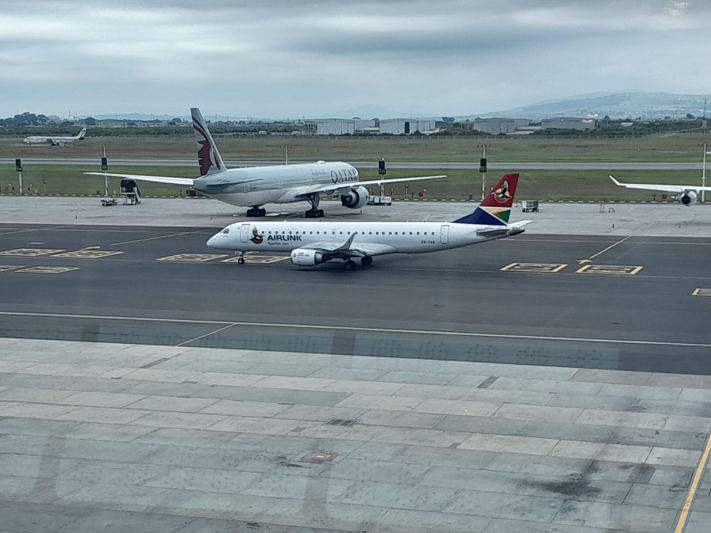
U.S. Customs and Border Protection has expanded its International Remote Baggage Screening programme to include Qatar Airways flights from Doha to New York-JFK, allowing connecting passengers to bypass traditional luggage re-checks.
Programme Expansion at JFK
U.S. Customs and Border Protection (CBP) initiated its International Remote Baggage Screening (IRBS) programme for Qatar Airways flights arriving from Doha at New York's John F. Kennedy International Airport (JFK) in July 2026.
This strategic move means passengers travelling from Hamad International Airport (DOH) to JFK, who then connect to subsequent onward flights, will no longer be required to reclaim and re-check their hold luggage with customs officials.
The initiative intends to streamline passenger processing through the major North American aviation hub, addressing a frequent point of delay for international transit travellers.
This expansion marks an important operational shift at JFK, specifically impacting a prominent air corridor from the Middle East into the United States and potentially setting a precedent for further such arrangements.
How Remote Screening Operates
The International Remote Baggage Screening system functions by allowing security personnel at select foreign airports to capture X-ray images of checked bags destined for U.S.-bound flights. For the Doha-JFK route, these scans originate from Hamad International Airport.
The collected images are then digitally transmitted to CBP officers, who review them remotely while the aircraft is still en route across the Atlantic. This pre-emptive assessment permits customs officials to inspect luggage for potential threats or illicit items before the flight reaches U.S. airspace.
Unless a bag is specifically flagged for additional, in-person inspection upon arrival, passengers can proceed directly to their connecting flight gates without interacting with the baggage claim or re-checking process. This method significantly cuts down on the time typically spent on customs formalities for transit passengers.
Security and Efficiency Gains
Diane Sabatino, CBP's executive assistant commissioner, stated that the expansion of IRBS on the Doha-JFK route "significantly bolsters our enforcement capabilities." Ms Sabatino explained that this initiative leverages advanced technology and international partnerships to identify and interdict threats proactively before they reach the U.S. She confirmed that collaboration with Qatar Airways, the Qatar Ministry of the Interior, and The New Terminal One at JFK strengthens the security posture, ensuring all baggage undergoes rigorous screening to prevent the entry of prohibited items.
The programme's design focuses on both enhancing national security and improving the efficiency of passenger flow, demonstrating a dual benefit for both border protection and traveller convenience.
Broader Programme Context and Future Outlook
CBP initially tested the remote screening concept in 2025 on American Airlines' service between Los Angeles and Sydney, Australia. Following successful trials, the programme has since been implemented on a limited number of other international routes.
These include United Airlines' flights from San Francisco to Sydney, and American Airlines' connections between Dallas/Fort Worth and London Heathrow. The inclusion of the Doha-JFK route expands the geographic reach of IRBS, particularly into the Middle East, a key transit region for global air travel.
This methodical expansion shows CBP's strategy to integrate advanced screening methods across more international gateways, potentially reducing bottlenecks at major U.S. airports and standardising security protocols with international partners.
Implications for Travellers and Industry
For travellers flying Qatar Airways from Doha to New York-JFK and connecting onward, this change means a markedly smoother arrival process at JFK. The elimination of the need to reclaim and re-check luggage saves considerable time and reduces potential stress associated with tight connection windows, making transatlantic travel more straightforward.
From an industry perspective, the successful implementation and expansion of IRBS suggest a model for future collaborations between international airports, airlines, and customs authorities.
Airlines operating into the U.S. from other major global hubs, particularly in Asia and the Middle East, may seek similar arrangements to improve passenger throughput and enhance their competitiveness, potentially leading to a broader adoption of remote screening technologies across more routes in the coming years.
Get The Post.
The global travel stories that matter, three mornings a week. Free.