US Senators Propose Reagan National Airport Traffic Cuts
A new bill introduced by Virginia Senators aims to cap hourly arrivals at Ronald Reagan Washington National Airport at 28 aircraft and remove 30 flight slots over five years, following a fatal 2025 midair collision.
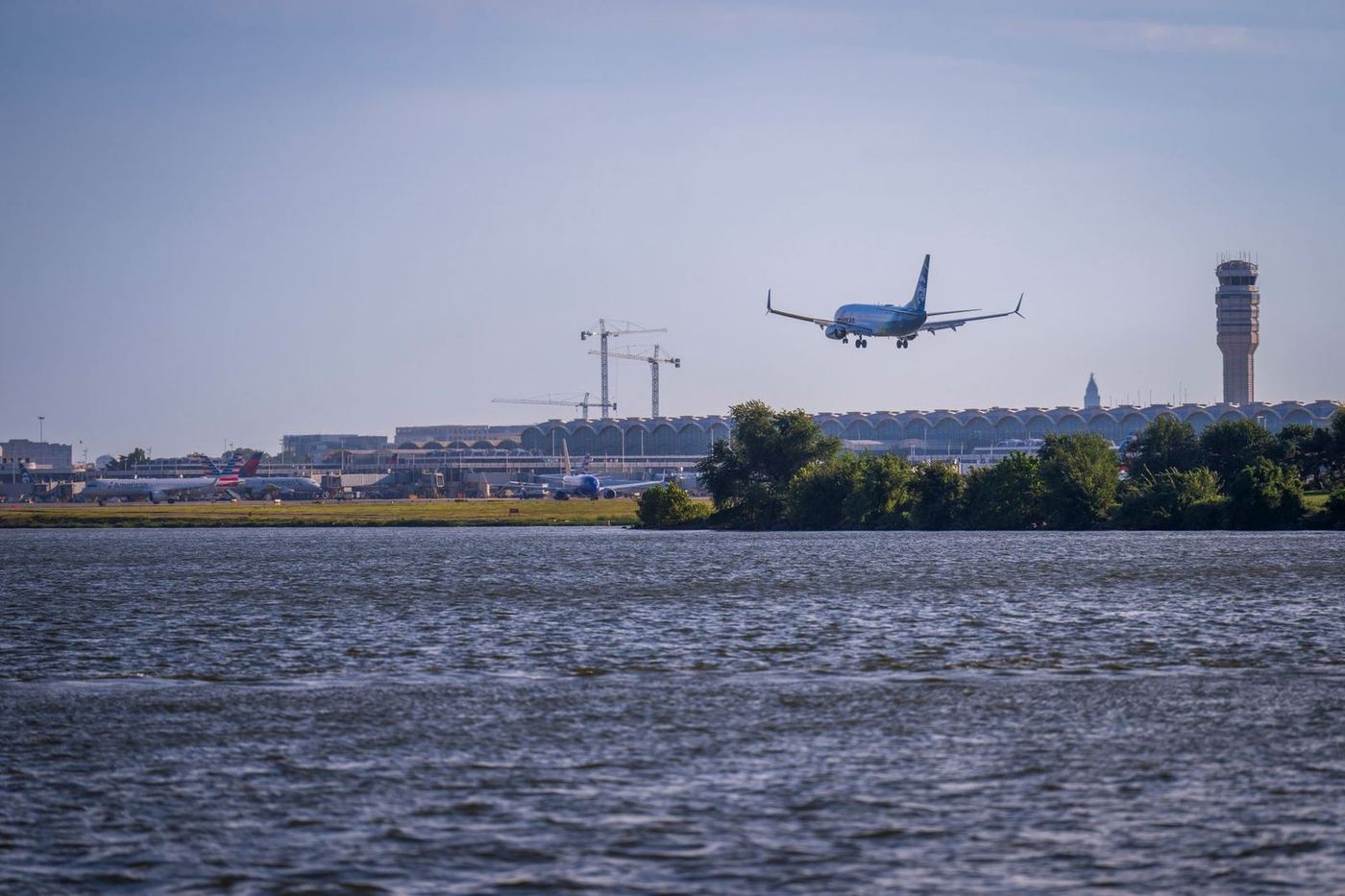
Proposed Safety Legislation for Reagan National
U.S. Senators Tim Kaine and Mark Warner, both representing Virginia, have introduced legislation aimed at significantly reducing air traffic at Ronald Reagan Washington National Airport (DCA). The proposed "DCA Air Safety Act" seeks to enhance safety by addressing what the senators describe as persistent overcrowding at the airport.
This legislative effort comes in direct response to a fatal midair collision in 2025 near DCA, which resulted in 67 fatalities. The incident involved an American Airlines passenger jet and a U.S. Army Black Hawk helicopter.
Findings from the National Transportation Safety Board (NTSB) cited overcrowding and the resulting strain on air traffic controllers as contributing factors to the tragic event.
New Operating Limits and Slot Reductions
Under the "DCA Air Safety Act," hourly arrivals at Ronald Reagan Washington National Airport would be capped at no more than 28 aircraft within any consecutive 60-minute period. The bill also mandates the establishment of binding interval caps for both takeoffs and landings, designed to prevent the clustering of aircraft movements.
Furthermore, the legislation proposes the elimination of 30 flight slots over a five-year timeframe, with six slots to be cut annually between 2028 and 2032.
The Federal Aviation Administration (FAA) would be responsible for determining which specific slots are removed, a process that the bill states must be public and include a 60-day window for interested parties to submit comments.
Context of DCA's Operational Pressures
Ronald Reagan Washington National Airport operates as one of only three fully slot-controlled airports in the United States, alongside New York-JFK and LaGuardia. Senators Kaine and Warner highlighted that since 2000, DCA has added 64 daily slots, increasing its operational density.
They pointed to the night of the 2025 collision, when one air traffic controller was responsible for managing 29 separate aircraft within an 18-minute span, including six takeoffs or landings in a five-minute period.
While previous safety measures were implemented following the NTSB's final report on the collision, such as eliminating a problematic helicopter route and introducing new policies for military helicopter flights, concerns about close calls persist in the busy Washington D.C. airspace.
Implications for Air Carriers and Asian Connectivity
Should the "DCA Air Safety Act" pass, air carriers operating into Ronald Reagan Washington National Airport will face significant adjustments to their schedules and capacity.
The reduction in hourly arrivals and the elimination of 30 flight slots between 2028 and 2032 will likely lead to fewer available flights, potentially affecting frequencies and passenger choices for travel to the Washington D.C. metropolitan area.
For Asian travellers and airlines, this development underscores the challenges of managing air traffic at highly constrained urban airports.
While DCA does not serve direct routes to Asia, similar capacity limitations at major Asian hubs like Tokyo Haneda Airport or Seoul Gimpo Airport could, if safety concerns mounted, prompt comparable regulatory actions, affecting international connectivity and slot availability for carriers such as Japan Airlines, ANA, Korean Air, or Asiana Airlines.
Get The Post.
The global travel stories that matter, three mornings a week. Free.


