A Quiet Milestone in Hue: What aNhill Boutique's MICHELIN Guide Selection Says About Vietnam's Old Capital
A small, independently run retreat on Thien An Hill has entered the MICHELIN Guide Hotel Selection 2026. The recognition belongs to the hotel. The consequences may belong to Hue.
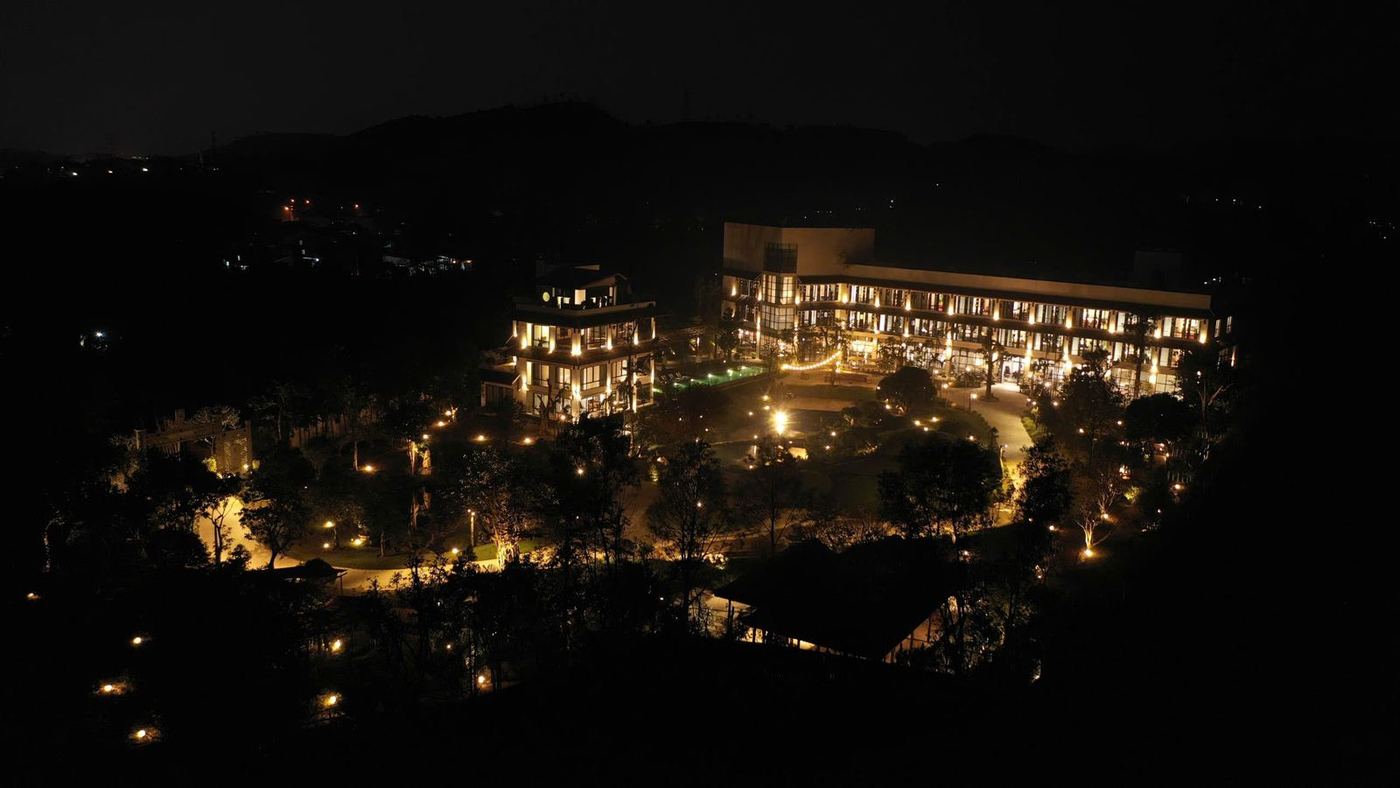
When aNhill Boutique told its followers that it had been selected for the MICHELIN Guide, it chose three words to frame the news: "a quiet milestone." It is an unusual way to announce the biggest recognition in a hotel's life, and it is exactly right.
Quiet is what aNhill sells. The property sits among pine trees on the southern edge of Hue, about ten minutes from the Imperial Citadel and 25 minutes from Phu Bai International Airport. It has no tower, no beach and no global flag over the door. What it has is a point of view about Hue, and the patience to express that view in small things.
That a guide as demanding as MICHELIN noticed says something about the hotel. It says more about where travel in Asia is heading, and about a city that has waited a long time for visitors to slow down.
The company it now keeps
The MICHELIN Guide built its name on restaurants, then turned the same method to hotels. Its 2026 hotel selection lists about 9,400 properties worldwide. Within that list, 2,832 hold MICHELIN Keys, the hotel equivalent of Stars, awarded at one, two or three levels.
In Vietnam, 21 hotels hold Keys in 2026. The names at the top are familiar to any luxury traveller: Capella Hanoi and Amanoi with Three Keys, then Four Seasons Resort The Nam Hai, Banyan Tree Lang Co, Zannier Bai San Ho and Sofitel Legend Metropole Hanoi with Two. Six Senses, Park Hyatt, Regent and InterContinental appear among the One Key hotels.
aNhill Boutique has not received a Key, and its own announcement is careful not to claim one. It has been selected, which is the Guide's way of saying: this is a hotel we recommend. On the MICHELIN website the property now carries a "New" label.
The honest comparison is therefore not about rank. It is about the room aNhill has walked into. The same guide that recommends hotels backed by global groups, large budgets and decades of brand standards now also recommends a boutique property in suburban Hue, listed with 32 rooms.
There is a second detail worth noting. The only Key hotel that MICHELIN lists under Hue is Banyan Tree Lang Co, a beach resort on the coast, far from the monuments. For a traveller who opens the Guide looking for a place to stay near the Citadel, the pagodas and the royal tombs, aNhill's inclusion widens a very short list.
A sense of place, built by hand
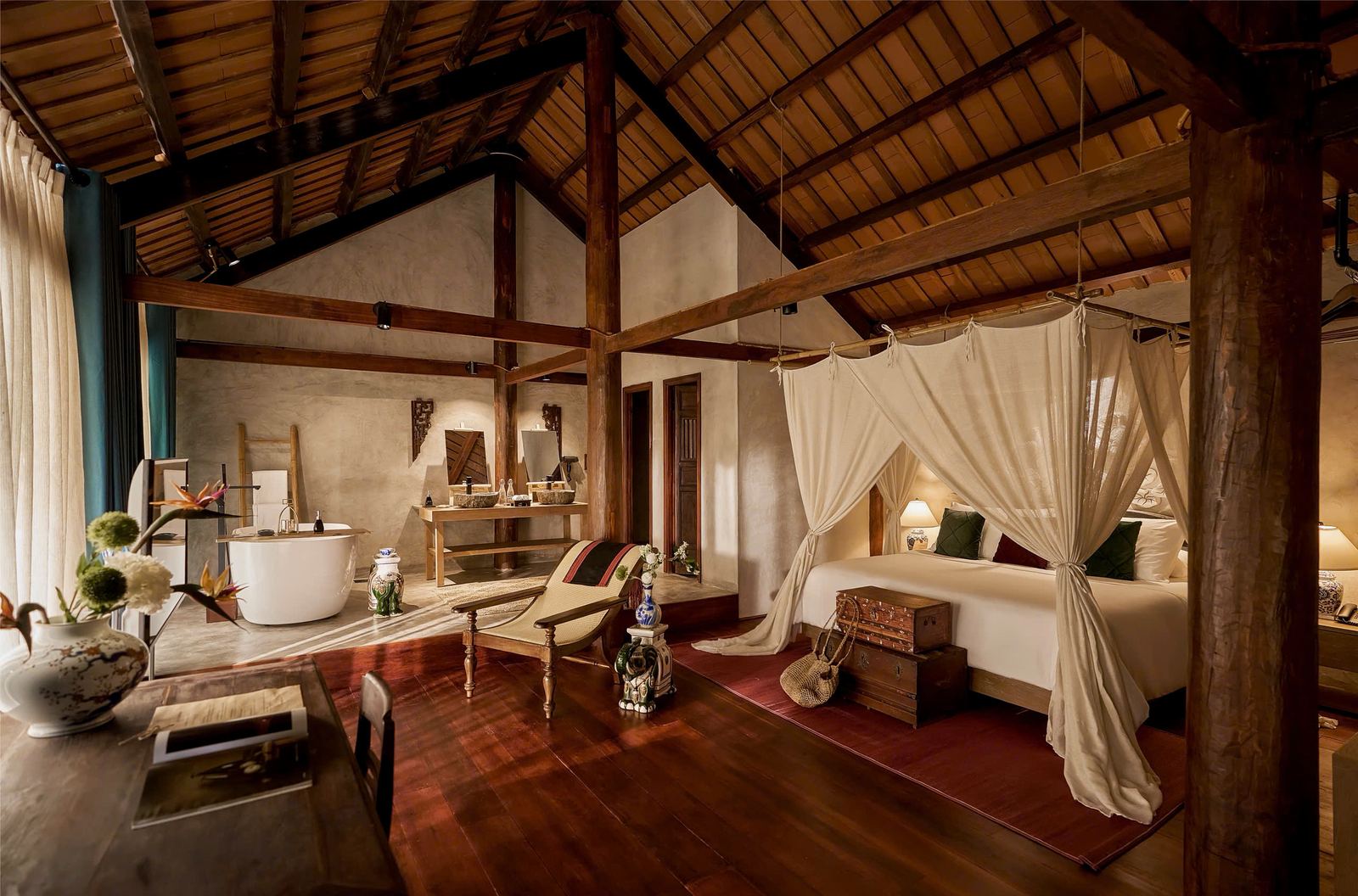
Why this hotel? MICHELIN's own description offers a clue. It speaks of a property that blends modern and colonial interior styles with "a tranquil, pastoral atmosphere," of villas where canopy beds meet raw concrete, of spa rooms set in greenery, and of a hotel that curates cultural excursions for its guests.
Read that again and notice what is missing. There is no mention of size, of facilities counted by the dozen, or of spectacle. The praise is for character.
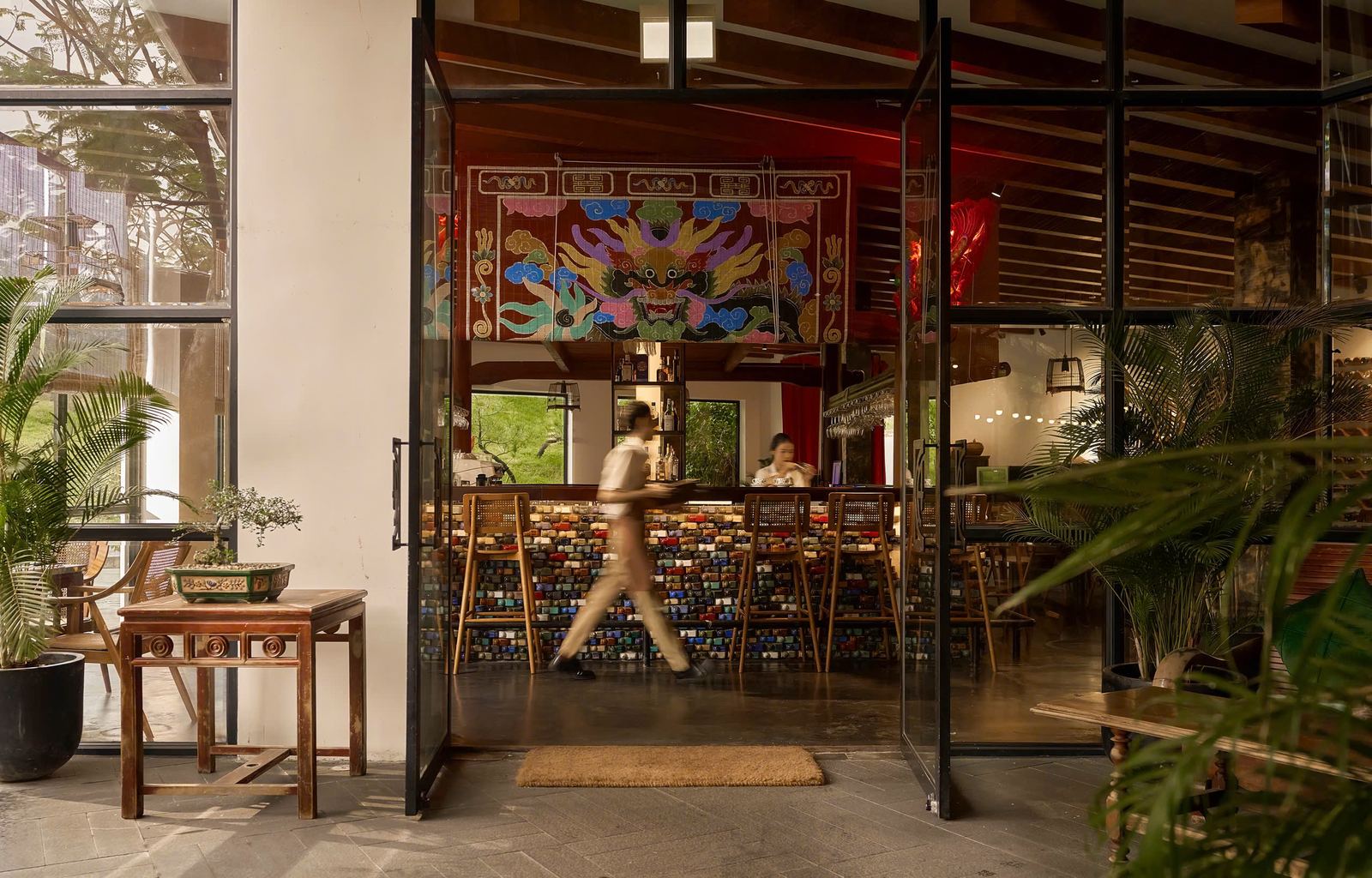
That character was a deliberate choice. In its announcement, aNhill described itself as "born from a love for Hue: its culture, craftsmanship, nature and quiet way of life." The design carries the claim. When The Dot Magazine profiled the hotel in 2022, it described cement surfaces that echo the city's old monuments, bamboo used for lamps and screens, and broken ceramic pieces assembled into mosaics, a nod to the craftsmen whose porcelain inlay decorates Hue's palaces and tombs.
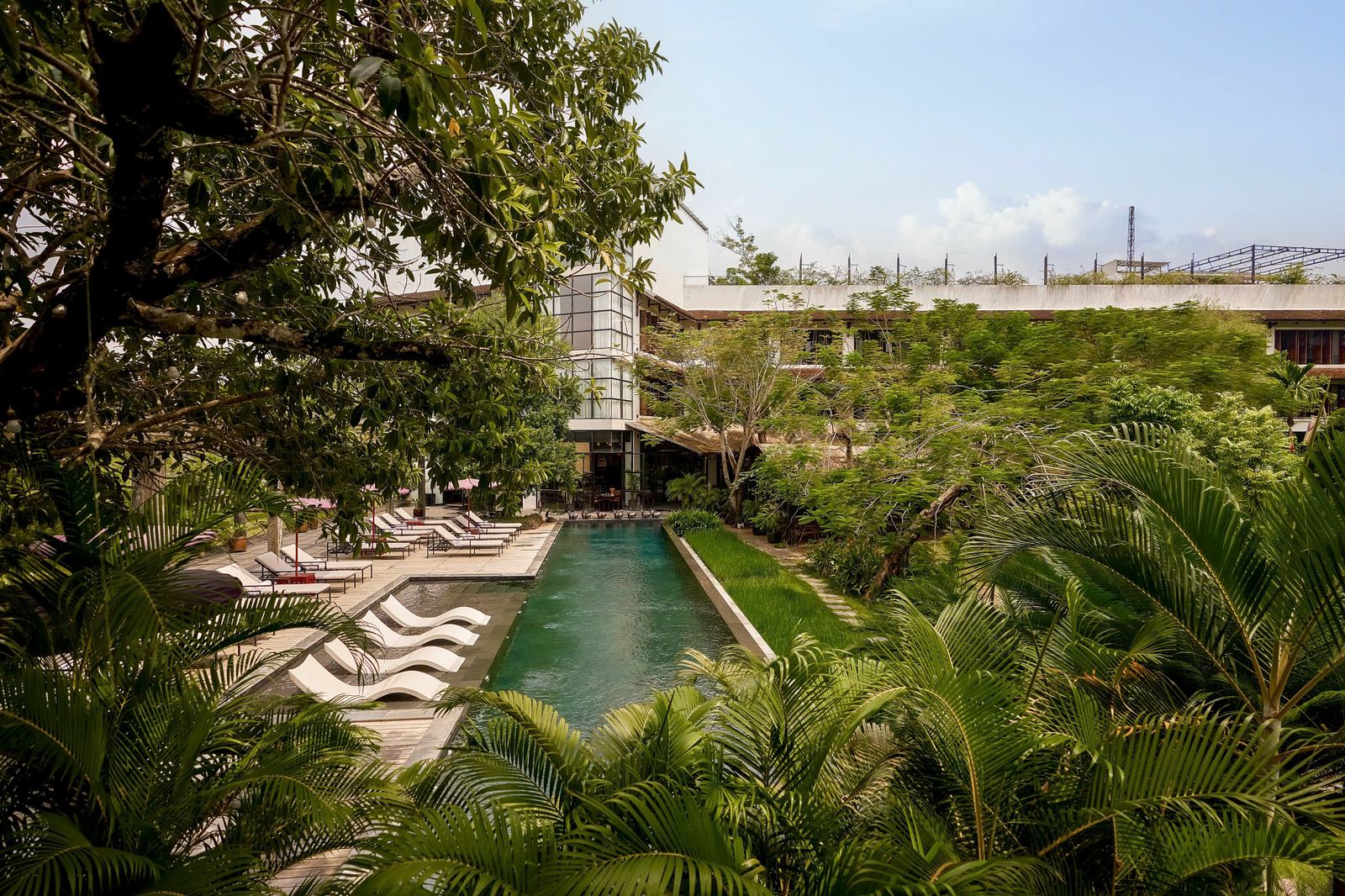
The grounds make the same argument. Travel specialists Trails of Indochina describe 1.4 hectares of gardens and pine, a spa inspired by traditional Hue architecture, and a yoga pavilion set inside a wooden house more than 100 years old. The AMA restaurant serves Vietnamese home cooking, with ingredients from the hotel's own organic garden according to Audley Travel. Guests can cycle, join a cooking class or have dinner beside the koi pond.
None of this is expensive in the way a marble lobby is expensive. It is expensive in attention. In the same 2022 profile, founder Tien Nguyen said the hotel welcomes everyone, whoever they are, and that he wants guests to feel it is a second home. The announcement echoes him, thanking the team for "the care" it "puts into every detail, every day."
The travel trade saw this before the Guide did. British tour operators such as Audley Travel and Experience Travel Group already feature aNhill in their Vietnam programmes, and Audley rates it First Class, praising its "tranquil surroundings, excellent cuisine, and plenty of activities." MICHELIN's selection confirms what specialists who send guests there had already concluded.
Hue's two-day problem
Hue was the seat of the Nguyen dynasty from 1802 to 1945, and its complex of monuments has been a UNESCO World Heritage Site since 1993. Few cities in Southeast Asia hold as much history in so small an area.
Yet Hue has long struggled to keep its visitors. According to figures reported by Dantri International in July 2026, travellers stayed an average of 2.2 days in the city in 2025. The city's target for 2026 is modest: 2.3 to 2.5 days, with average spending of VND 2.8 to 3 million per trip. To get there, Hue is investing in a night street along the Nhu Y River and in artistic lighting for the Imperial Citadel.
Those projects answer one question: what will visitors do after dark? A hotel like aNhill answers a different one: why stay another night at all?
In our view, this is where the selection matters most. Destinations lengthen stays when the place you sleep becomes part of the reason you came. A hotel that sends its guests out by bicycle, teaches them to cook local dishes and brings them home to a garden under the pines is doing the city's work for it. It turns Hue from a day of monuments into a few days of living.
The MICHELIN Guide also puts Hue in front of a specific kind of traveller: one who plans a trip around where to eat and sleep well, and who spends accordingly. For a city that wants higher spending per visitor more than it wants higher volume, that is the right audience.
What a small hotel proves
It would be easy to overstate this. One selection does not change a destination, and aNhill's team would likely be the first to say so. Their announcement ends not with a claim but with thanks, "from our little corner of Hue, with gratitude."
Still, the lesson travels well beyond Thien An Hill. Across Asia, independent owners often assume that international recognition is reserved for hotels with a global brand behind them. aNhill suggests otherwise. A property can be small, locally rooted and far from the beach, and still be judged worthy of the world's best-known guide, provided it knows precisely what it is.
For Hue, the timing is good. The city is asking visitors to stay longer. On a hill of pines just south of the Citadel, there is now a MICHELIN-recommended reason to do so.
A quiet milestone, then. But in a city that has always preferred to speak softly, quiet is how the important things are said.
Images courtesy of aNhill Boutique.
Get The Post.
The global travel stories that matter, three mornings a week. Free.


