La Siesta Founder Do Van Dan Reveals Strategy Against Vietnam's Hotel Influx
Vietnam leads Southeast Asia on hotel revenue growth, and record new supply is arriving to meet it. Do Van Dan, who built La Siesta from ten rooms to a Tripadvisor world top-ten, argues the only defensible asset is the one a competitor cannot commission.
HANOI. Vietnam is the fastest-growing hotel market in Southeast Asia, and that is precisely the problem for anyone already operating in it. Revenue per available room rose 23.3 per cent year on year in the first half of 2026, the strongest in the region, and international brands have taken notice: Da Nang alone has close to 13,000 rooms under construction, in final planning or proposed. When supply arrives at that pace, the operators who were there first discover that everything they built can be built again, larger and better capitalised, within eighteen months.
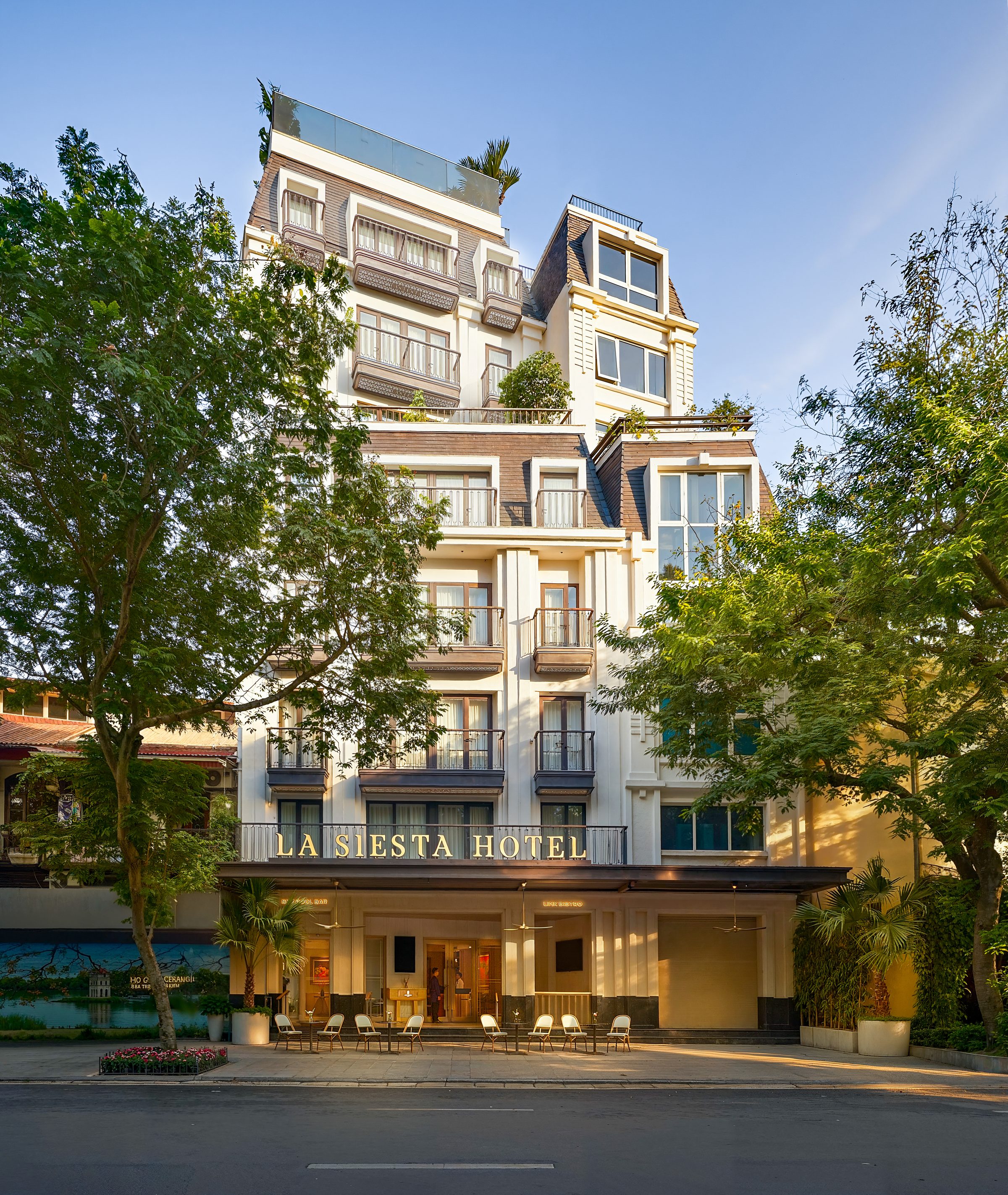
Do Van Dan has spent more than two decades preparing for exactly that. The Chairman of Elegance Hospitality Group began with a ten-room hotel in Hanoi’s Old Quarter in the late 1990s and now runs seven La Siesta hotels and resorts across Hanoi, Saigon and Hoi An, alongside a chain of spas and restaurants. In 2026, Tripadvisor placed La Siesta Hoi An Resort & Spa sixth in its Best of the Best worldwide, second in Asia and first in Vietnam, a ranking driven entirely by guest reviews rather than by inspectors or advertising spend.
His answer to the copying problem is unusual, and for operators watching the same supply curve it is worth examining in operational terms rather than inspirational ones.
What cannot be tendered
Ask most hoteliers what protects their position and the answers are familiar: location, design, a signature restaurant, a loyalty tier. Each of those appears on a bill of quantities. Each can be procured by a competitor with a larger budget and a shorter timeline.
Mr. Dan’s framing separates what a contractor delivers from what only time delivers. A building is bricks, cement, sand and steel, he argues, and holds no memory. Whatever a guest actually remembers accumulates afterwards, through service repeated daily until it becomes reflex. The operational consequence is a compounding target rather than a launch target: staff are asked to be one per cent better than the previous day, sustained across two decades and roughly a thousand employees.
Asked whether he fears his culture being copied, his reply is the closest thing the group has to a competitive moat statement:
“I have nothing to tell you. Because I have thousands of small details inside, accumulated over two decades to arrive at today. That is precisely why I wouldn’t know which one to pick.”
The claim is testable in the market, and it has been tested. As a global luxury brand prepared to open beside Hoan Kiem Lake, its sales team met a major travel partner in Saigon. The partner’s executives asked whether the incoming brand had studied service at La Siesta first. For an independent group, an international competitor being pointed toward it for benchmarking is a harder credential to buy than any award.
The retention maths
The part of this most directly relevant to operators is staff turnover, which in Asian hospitality routinely runs high enough to erode service standards faster than training can rebuild them. Every departure resets the guest relationship and adds recruitment and onboarding cost that rarely appears as a single line in the P&L.
La Siesta’s retention is visible in the simplest way: guests returning after a decade are met by the same bellman, the same front-office staff, people who have been there long enough to be remembered by name. That continuity is the mechanism behind the review scores, not a by-product of them.
The policies behind it are unglamorous. The chairman eats in the staff canteen, by his account to judge whether his people are eating well enough rather than to be photographed doing it. When fuel prices spiked during global conflict, the group’s first move was to subsidise employee petrol rather than trim costs. He describes the fashionable phrase “customer-centric” as the language of a business still worried about its own survival, and says the group shifted about ten years ago to putting employees, customers, community and partners at the centre together.
For a chain expanding across three cities, that ordering is also a control system. A manager who treats a property as someone else’s responsibility, he argues, will never retain its detail: “I remember because I consider it my business. The moment you treat something as someone else’s business, you will never remember it.”
The menu as a sourcing decision
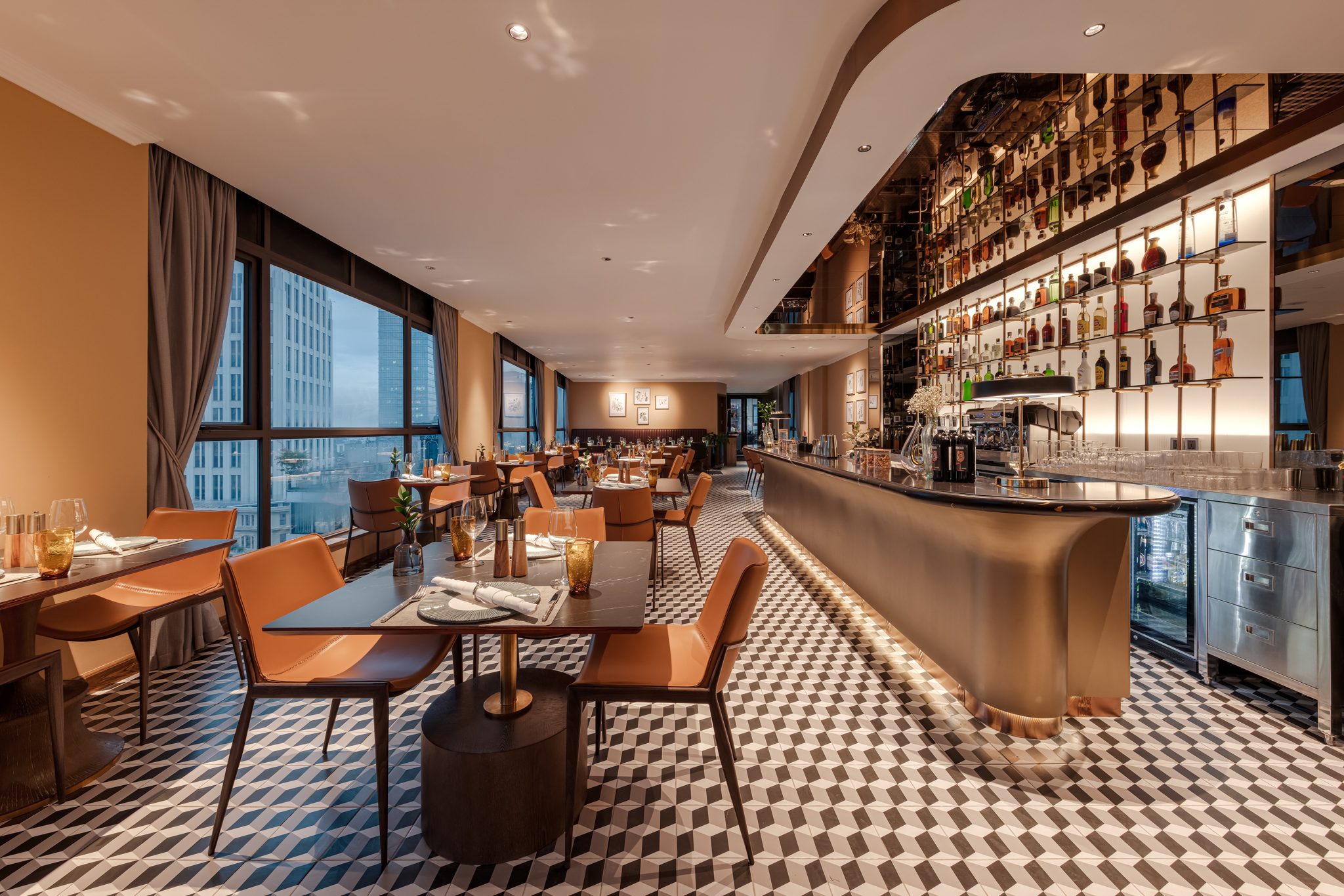
The clearest illustration of how the principle reaches operations came from a menu review in Hoi An. The resort runs two restaurants, one Vietnamese and one European. The European kitchen proposed a menu built on ingredients imported from the United States, Japan and Australia. Rather than reject it, Mr. Dan posed a single test: placed in Dubai, Singapore or Korea with the logo covered, would a guest know where they were?
The answer was no, because those ingredients are available in every market. The alternative he set is a procurement rule with a marketing outcome: build the menu on what is grown and made locally, so that the dish itself identifies the destination.
For operators the trade-off is real rather than rhetorical. Imported protein offers consistency, predictable pricing and simpler quality control; local sourcing introduces seasonality and supplier risk. What it buys is a product a competitor two blocks away cannot replicate by placing the same order with the same distributor, and, in a market where guests increasingly travel for food, a reason to choose one property over another.
The same logic is what he offers Vietnamese businesses aiming at international markets: do the smallest things well, repeat them, and recognition follows without a campaign.
Distribution, technology and what he refuses to automate
Independent operators in Vietnam face a structural squeeze that has little to do with service quality. Online travel agency commissions approach 30 per cent in some markets, a level that can exceed the fees charged by an international management company, which is why the choice between flying a global flag and staying independent is increasingly a distribution question rather than a branding one.
Mr. Dan’s response is not to withdraw from technology. Two years ago the group rolled out AI training across senior and middle management, teaching them to write, edit video and run internal classes. When someone accused him of overusing the tools, his correction was precise about where authority sits:
“Use the right term: mastering AI. Mastering means we command it; it serves as our assistant. Only humans with knowledge can be masters. Technology is the assistant. Human is the product.”
The strategic bet underneath is that automation raises the value of what cannot be automated. Large groups have already industrialised the ordinary parts of hospitality; a later entrant competing on those terms loses on scale. The remaining ground is the part that resists systematisation, which is also the part that is hardest to staff, hardest to train and hardest to sustain across an expanding portfolio.
Internally the group treats accumulated knowledge as the asset rather than cash, with employees teaching one another and, by the end of this year, writing the group’s own history: a book about La Siesta authored by the staff who worked there. A coffee brand carrying the same approach is being prepared for export.
What it means for the trade
Three points travel beyond this one group. The first is that in a market absorbing record supply, the defensible asset is the one with a long build time; anything a competitor can commission, they eventually will. The second is that retention is a revenue strategy rather than an HR metric, because in hospitality the returning guest and the long-serving employee are the same relationship viewed from two sides. The third is that localisation is a procurement decision before it is a marketing message, and it is enforced or abandoned in the purchase order, not in the brand book.
None of it is quick. That is the point: a five-star hotel can be built in eighteen months, and none of these can.
Get The Post.
The global travel stories that matter, three mornings a week. Free.