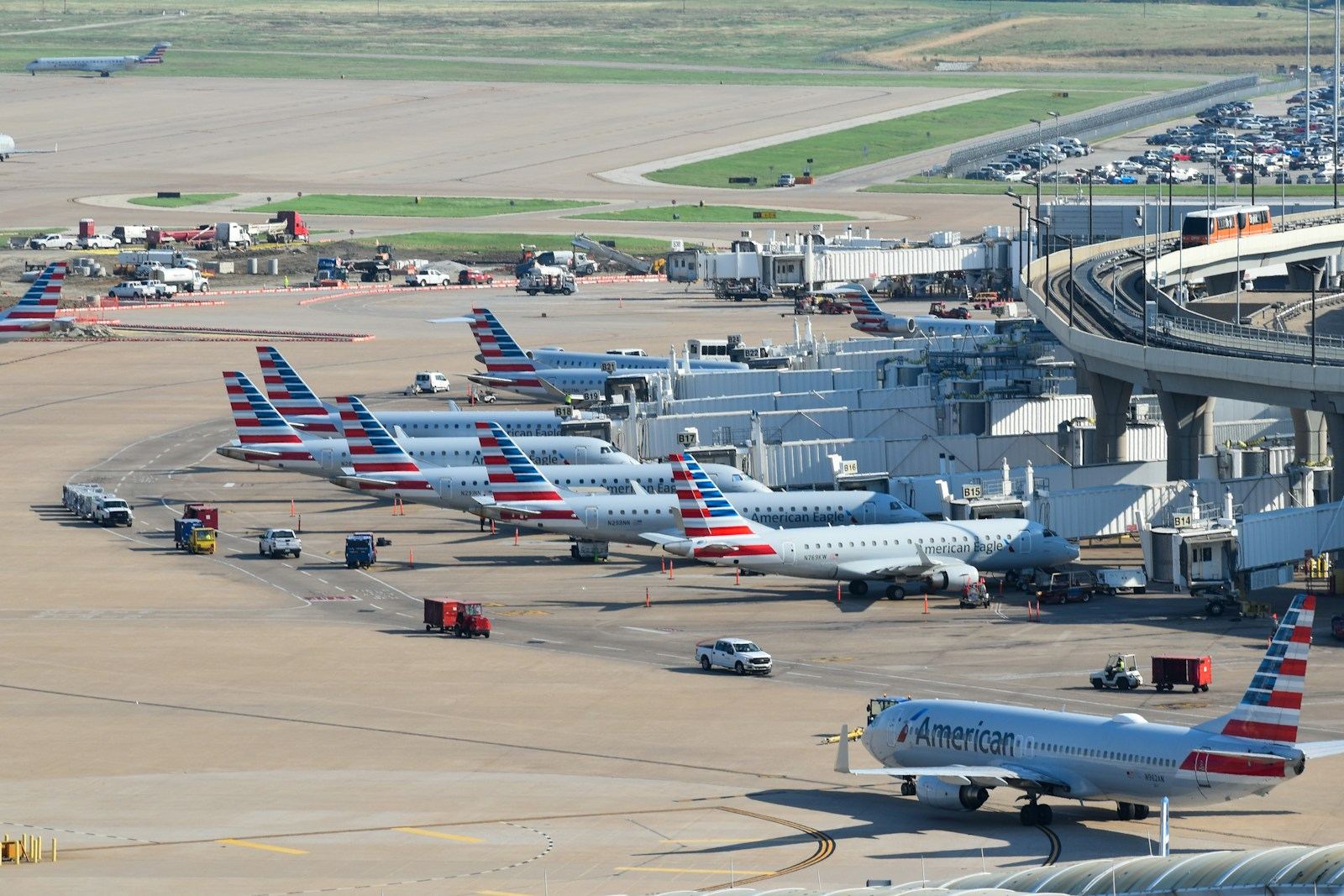
Aviation Safety: Most Go-Arounds Occur in Final 500 Feet of Approach
A significant majority of aircraft go-arounds, where a landing is aborted, take place when planes are within 500 feet (152 metres) of the runway. This critical altitude serves as a final safety gate for pilots to ensure stable approach conditions, according to analysis by Simple Flying, citing industry data.
Understanding Go-Arounds and Their Frequency
A go-around is a standard aviation procedure where pilots abort an attempted landing during the final approach phase, or occasionally after a brief touchdown, for safety reasons. While rare, occurring at a rate of one to three per 1,000 approaches, as reported by the Flight Safety Foundation, these events are crucial for preventing accidents. Research conducted by Boeing, covering commercial jet crashes between 2012 and 2021, revealed that half of all incidents occurred during the approach, landing, and go-around phases. This data, highlighted by Simple Flying on 31 July 2026, underscores the importance of precise execution during these critical flight stages. Pilots or air traffic control (ATC) can initiate a go-around if an aircraft is not stable, if environmental conditions are unsuitable, or if an obstruction on the runway necessitates it. Far from being an emergency, a go-around demonstrates adherence to rigorous safety protocols designed to protect passengers and crew.
The Critical 500-Foot Threshold
The 500-foot (152-metre) altitude above the runway is a pivotal point for go-around decisions. This height often aligns with the 'stabilised approach gate' for visual landing conditions, a benchmark where an aircraft must be fully prepared for landing. Pilots must verify that the aircraft is in its final landing configuration, with flaps and landing gear correctly deployed, and maintain the correct airspeed, typically within five knots of the target. Additionally, the descent angle should be approximately three degrees, with a sink rate between 600 and 700 feet per minute (183 to 213 metres per minute). Any deviation from these parameters at this stage prompts a re-evaluation of the landing safety. The period between 500 feet and 300 feet (91 metres) is particularly significant, as pilots are traditionally taught to initiate a go-around ‘without hesitation’ if any issues arise, making this 200-foot segment a frequent zone for such decisions, as explained by Simple Flying.
Environmental Factors and Pilot Decision-Making
Beyond aircraft configuration and speed, environmental conditions play a substantial role in go-around decisions, particularly at lower altitudes. Low-level wind shear and unexpected gusts can destabilise an aircraft significantly, especially during adverse weather. The closer an aircraft is to the ground, the less time pilots have to implement corrective measures, making the 500-foot mark a crucial point for assessing these risks. A report by the Flight Safety Foundation, titled 'Go-Around Decision-Making and Execution Project', surveyed commercial aviation pilots on the lowest safe altitude for executing a go-around under various circumstances. For many scenarios, including lateral deviation from the centreline, incorrect airspeed, idle thrust, improper landing configuration, excessive vertical descent rate, or unstable conditions with high crosswinds, the majority of pilots identified 500 feet as the altitude where a final decision is made. This shows the convergence of operational and environmental factors at this specific height.
Global Aviation Safety and the Asian Context
The prevalence of go-arounds at the 500-foot mark highlights the rigorous safety standards applied across global aviation. This standardised approach to landing protocols safeguards air travel, ensuring that flights operate within strict safety margins. For travellers, understanding this procedure shows the depth of safety measures in place, even if a go-around can initially seem concerning. For the aviation industry, these consistent protocols drive continuous pilot training and technological advancements aimed at enhancing situational awareness and decision support. In the Asian context, where air travel volumes are among the highest globally and continue to expand rapidly, adherence to these universal safety benchmarks is paramount. Major Asian hubs, including Singapore Changi, Hong Kong International, Tokyo Narita, and Seoul Incheon, manage complex air traffic in diverse weather conditions. The uniform application of stable approach criteria, including the 500-foot gate, ensures operational integrity for carriers like Singapore Airlines, Cathay Pacific, Japan Airlines, and Korean Air, securing millions of passenger flights across and from the region. This global commitment to aviation safety underpins the reliability of air travel worldwide.
Get The Post.
The global travel stories that matter, three mornings a week. Free.
By subscribing you consent to receive this newsletter from GlobalTravelPost (Asia Press Centre Group); unsubscribe at any time.
Related stories.
American Airlines 737 Forced Go-Around at Washington National After Regional Jet Enters Active Runway
Aviation Updates: Cathay Pacific Expands Latin America, TransNusa Adds Bali-Phuket, Emirates Upgrades Cabins, Cebu Pacific Adopts Starlink